



Covered by the ‘canon storm’ of the 1960s, it was easy to lose sight of the fact that there have always been texts for certain people that were considered exceptionally valuable and whose knowledge had a unifying effect. Studies on canons of different epochs, regions, or genres are largely lacking in the field of Neo-Latin literature. The aim of this subproject is to clarify which Neo-Latin texts were attributed greater importance through the canon-building processes, such as editions, translations, and commentaries, inclusion in school or academic curricula, citations in scholarly literature, references in other works, etc. than other texts that did not receive such treatment. Which texts enjoyed such attention only for a limited time or region, which had an impact beyond their epoch or area of origin?
Publications
- Schaffenrath, Florian (rec.), Andrae, J.: Die Republik am Abgrund. Cicero, Orationes Philippicae, in: Didaktische Informationen 78 (2019), 5–6 (online).
- Schaffenrath, Florian (rec.): Lorenzo Gambara’s Caprarola and On Poetic Composition: Text, Translation and Commentary, edited and translated by Paul Gwynne and Patrick M. Owens, in: Journal of Jesuit Studies 13 (2026), 152–154 (DOI).
- Schaffenrath, Florian: Die Kolonisation Kaliforniens durch die Jesuiten: zu José Mariano de Iturriagas Epos Californias (1740), in: Latein – Mutter der Kolonialsprachen?, ed. by Wolfgang Polleichtner (Speyer, 2026), 131–143 (online).
- Schaffenrath, Florian: Le poème épique de Pierre Dumay sur les compats de Thionville en 1643, in: Camenae 35 (2026) (online).
Talks
- Schaffenrath, Florian: Les commentaires humanistes comme sources de la Kanonforschung historique, conference De la norme à l’œuvre. Élection et fonctions des canons d’auteurs et d’artistes antiques de l’Antiquité à nos jours, 15 October 2026.
- Papotti, Veronica: Performing Language: Interactional Strategies in Latin Comedy, Latin vulgaire – latin tardif (LVLT), Verona, 18 September 2026.
- Schaffenrath, Florian From Reception Studies to Early Modern Studies: The Development of Neo-Latin Studies over the Last Two Decades, Aurora Summer School NeoLEMoS, Innsbruck, 26 July – 1 August 2026.
- Schaffenrath, Florian: Le corps du saint : le martyre et la séparation du corps dans les épopées néo-latines sur les saints, conference Malheurs du corps épique – figuration, symbolisation : Antiquité, Moyen âge, Renaissance, 19 June 2026.
- Schaffenrath, Florian: The Impact of Love in de Bussières Scanderbegus (1658), conference Skanderbeg in Early Modern Literature, University of Tirana, 21 May 2026.
Team Members


Sub Project 7’s Contributions and Activities
-
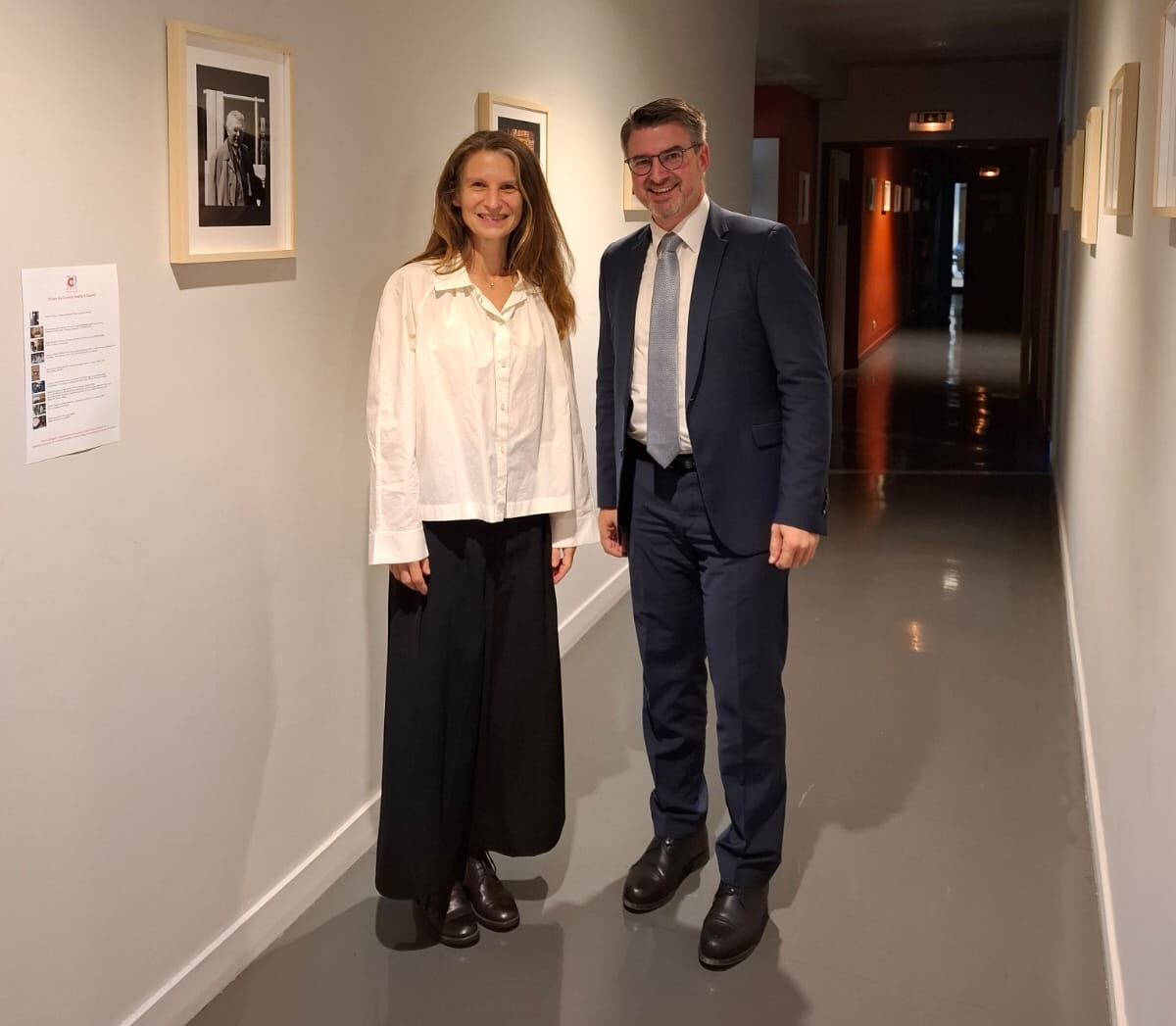
The conference “De la norme à l’œuvre. Élection et fonctions des canons d’auteurs et d’artistes antiques de l’Antiquité à nos jours” took place in Paris from 14 to 16 October 2026. There, Florian Schaffenrath gave a paper entitled “Les commentaires humanistes comme sources de la Kanonforschung historique”. The organisers, Émilie Séris (on the picture here with Florian…
-
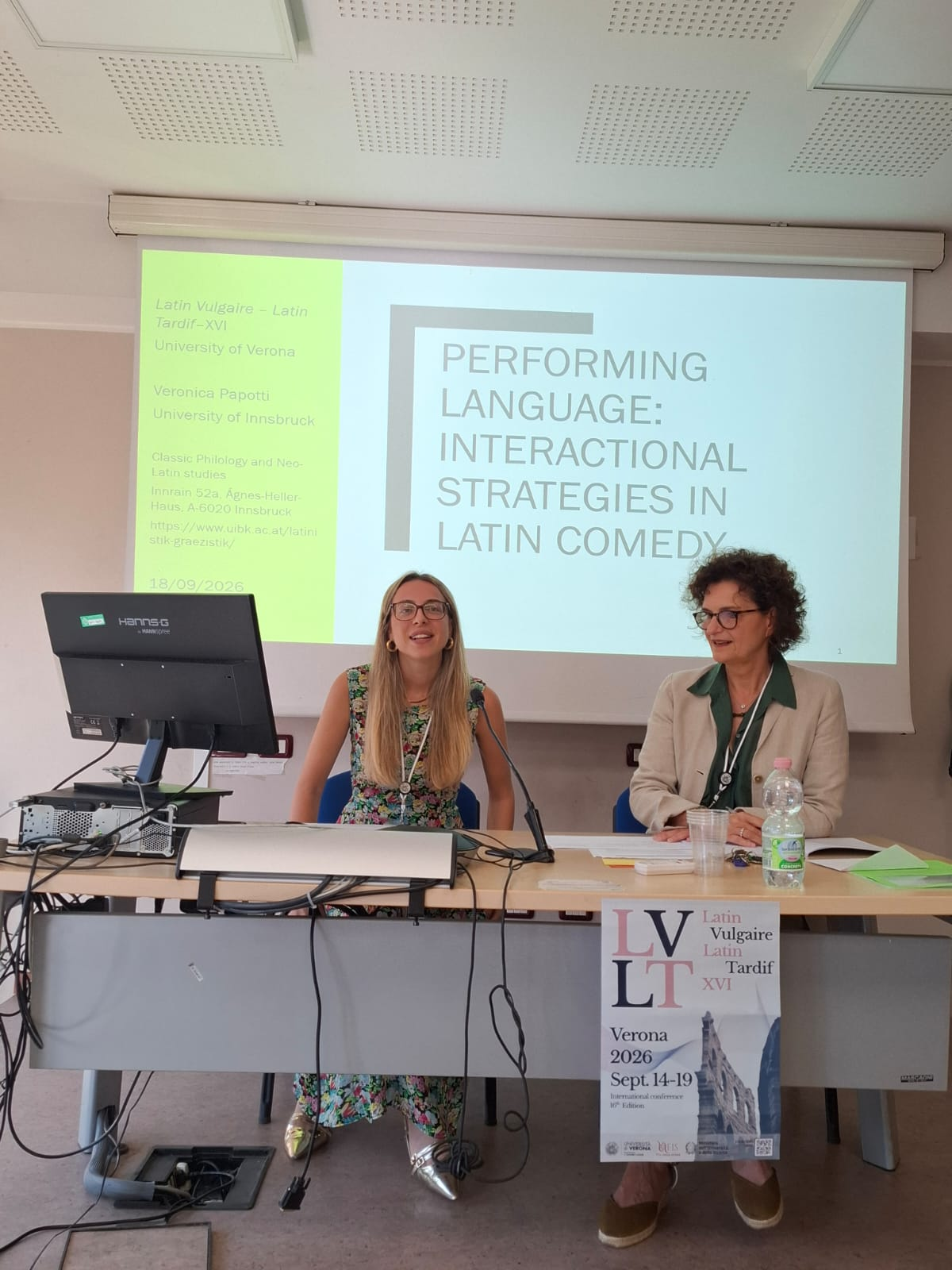
Veronica Papotti, PhD student in Sub Project 7 Kanones of Neo-Latin Texts, participated in the international conference Latin vulgaire – latin tardif (LVLT), held at the University of Verona from Monday 14 to Friday 18 September 2026. The conference brings together linguistic and philological approaches to Latin, with particular attention to linguistic variation and to…
-

Veronica Papotti, PhD researcher in Subproject 7 Canons of Neo-Latin Texts, has been awarded a Seminarium Fellowship for the academic year 2027–2028 at Katholieke Universiteit Leuven. Under the supervision of Raf Van Rooy and Nicholas de Sutter, she will investigate the role of Periochae in the formation and transmission of the Neo-Latin dramatic canon in Early…
-
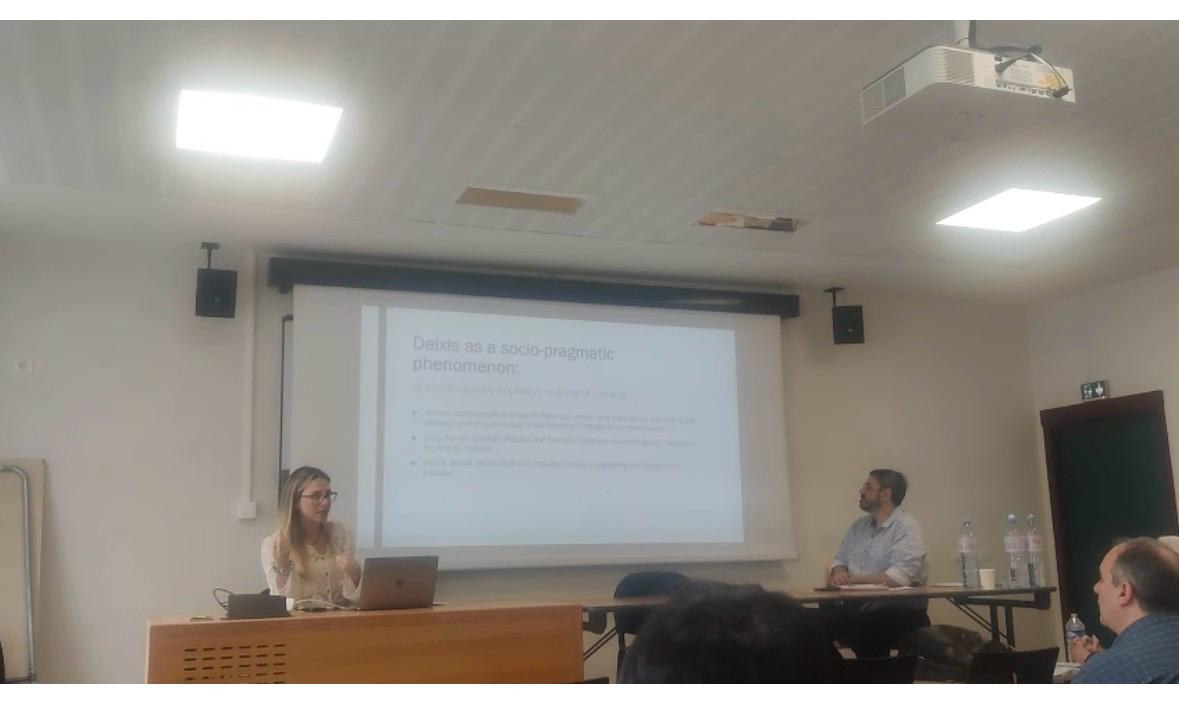
Veronica Papotti, PhD student in Sub Project 7 Kanones of Neo-Latin Texts, participated in the biennial conference L’Approximation en latin, organised by the Centre Alfred Ernout and held at Sorbonne Université (Paris) from 1 to 3 June 2026. During the conference, she presented a paper devoted to the use of deixis in Roman comedy, focusing…
-
Our researcher Veronica Papotti attended the inaugural meeting of the international network Canons of Latinity, 1150 to the Present, entitled Latin Responses to Horatian Lyric, 1150 to the Present, held in Oxford from 16 to 17 April 2026. The event brought together scholars working on the reception and transformation of Horace across a wide chronological spectrum, fostering…