



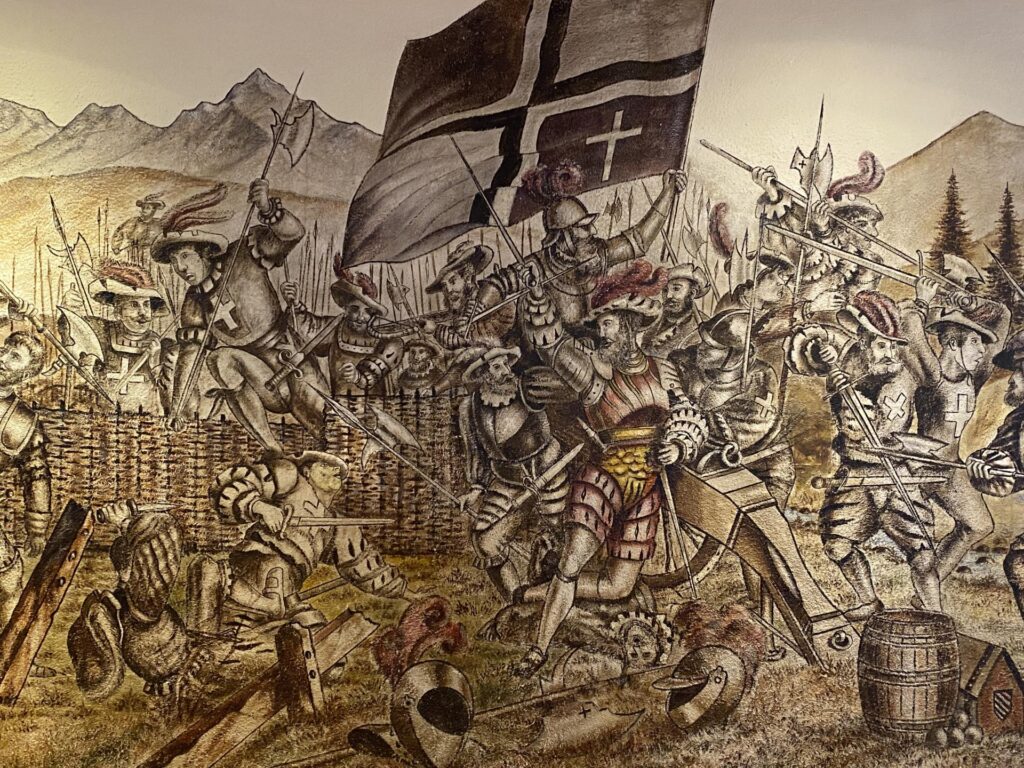
Simon Lemnius (died 1550) was the most important humanist of eastern Switzerland. He is best known for the controversy he had with none other than Martin Luther (1483–1546) while still a student at the University of Wittenberg: Lemnius had published a collection of Latin epigrams, which Luther felt so offended by that he had the young Lemnius imprisoned and eventually forced him to flee Wittenberg. In return, Gotthold Ephraim Lessing (1729–81) later dedicated a detailed homage to him, portraying him as a poet who fell out of favour and suffered persecution because of his work.
With the Raeteid, a Latin epic poem in nine books, Lemnius composed in the mid-sixteenth century a work that can justifiably be described as the national epic of the Grisons. The poem celebrates the heroic resistance of three Swiss groups that, for the first time, joined forces during the Swabian War in 1499 to oppose the troops of Maximilian I. The union of these three groups or Bünde – Gotteshausbund, Grauer or Oberer Bund, Zehngerichtebund – later developed into the canton of Graubünden. The poem’s central heroic figure is Benedikt Fontana (c. 1450–99), who had given the decisive turn to the Battle of Calven on 22 May 1499. Fontana’s first appearance in literature occurs in Lemnius’ Raeteid.
A modern edition of the epic was published in 1874 by the Swiss politician and intellectual Placidus Plattner (1834–1924), who served as governor of Graubünden from 1873 to 1874. Issued for the Historisch-antiquarische Gesellschaft von Graubünden in Chur, this edition was an important step in making the text accessible, but it suffers from serious shortcomings. Plattner apparently relied on only one manuscript, and, more problematically, he intervened extensively in the text, restructuring it according to his own ideas and abbreviating numerous passages whenever he considered them to be incompatible with the historical facts.
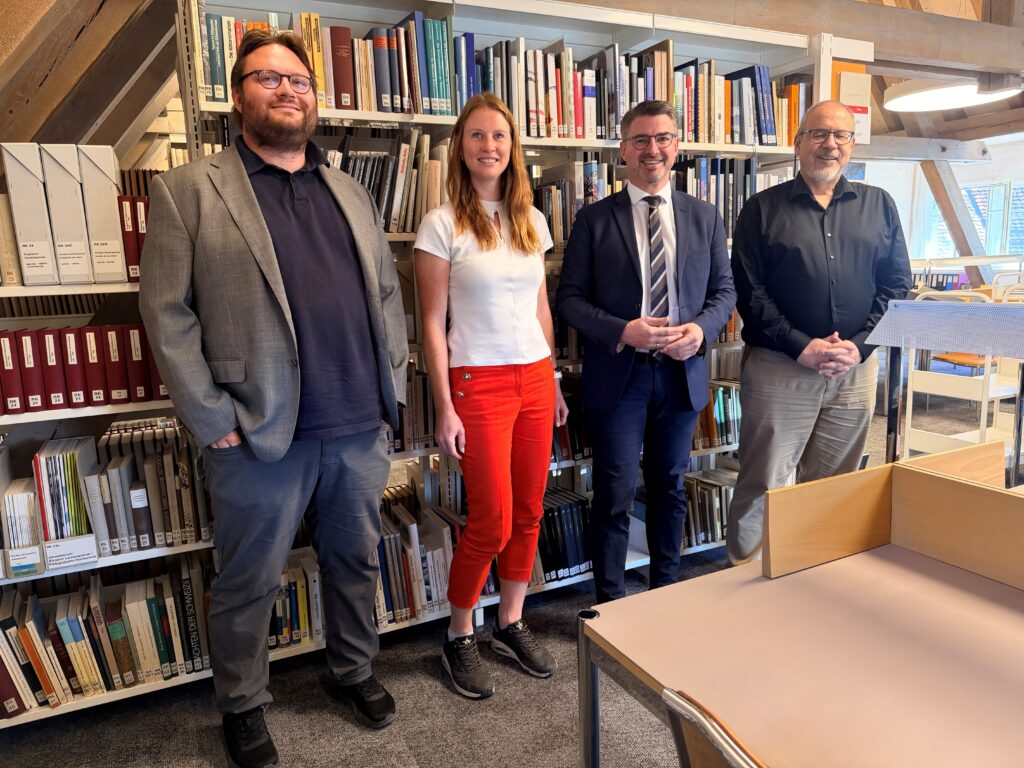
The aim of the present project is, after a century and a half, to provide a modern critical edition of the Raeteid based on all known manuscripts. This edition will be accompanied by a reliable translation and a historical and literary commentary, thereby making this allusive work accessible to a wider readership.
Publications
Talks
- Jordan, Delila: Epische Autorität und dichterische Selbstinszenierung in Simon Lemnius’ Raeteis, NeoLatina Conference, Innsbruck, 24 September 2026.
- Schaffenrath, Florian: Simon Lemnius und König Maximilian I. Eine imitatio von Lucans inconsistency?, conference Aktualität des Epos – Aktualität im Epos, 23 September 2026.
- Foggia, Antonia: Filtering Neo-Latin through Cicero: Education and Autority, Society for Neo-Latin Studies Postgraduate and ECR Scholars Event, online, 20 March 2026.
- Jordan, Delila: Allegoria und imitatio in Servius’ Eklogenkommentar, 45th Metageitnia, Innsbruck, 16 January 2026.
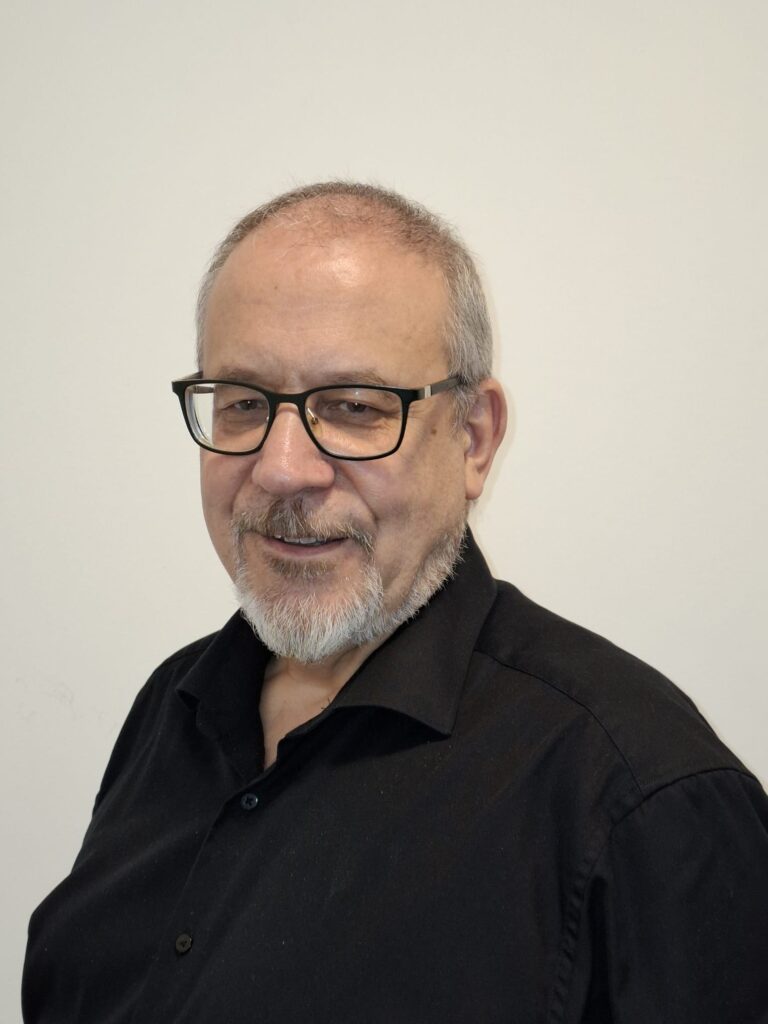
Team Members


Lemnius projects’s activities
-
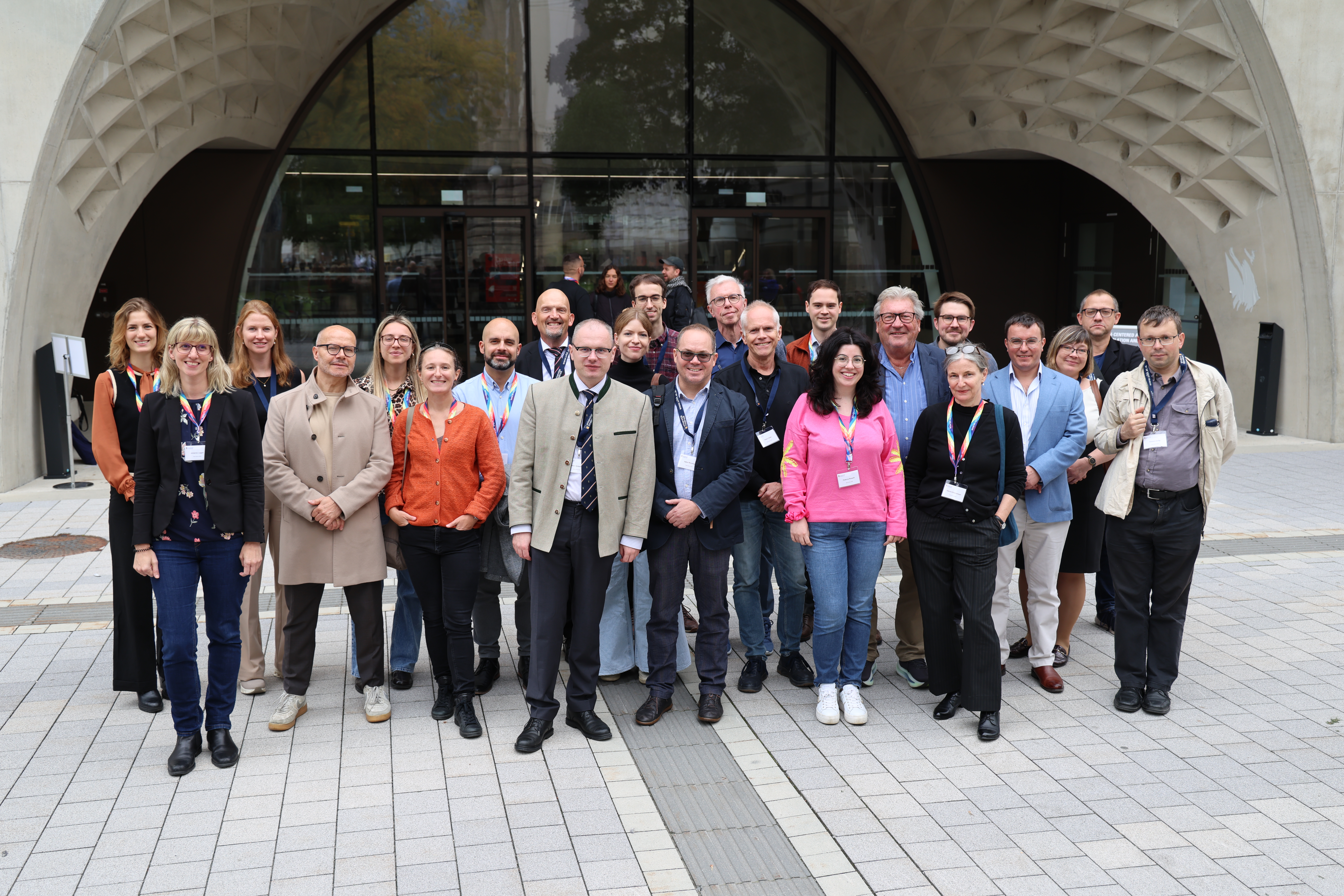
On September 24 and 25, the NeoLatina conference was held in Innsbruck. This conference series, held annually in turn by Universities of Würzburg, Freiburg i.Br. and Innsbruck is dedicated to Neo-Latin authors and topics. This year, the conference was held in cooperation with the SRA “Neo-Latin in the Modern World” and the Centre for the…
-

On 25 September 2026, Salome Meyer, the Swiss Ambassador to Austria, visited our institute together with Fabian Leimlehner, Honorary Consul of Switzerland in Tyrol, and was briefed on the Lemnius project, which represents an ideal collaboration between Chur and Innsbruck. Also joining us were senior representatives of our university, Vice-Rector Gregor Weihs, Vice-Rector Dirk Rupnow,…
-
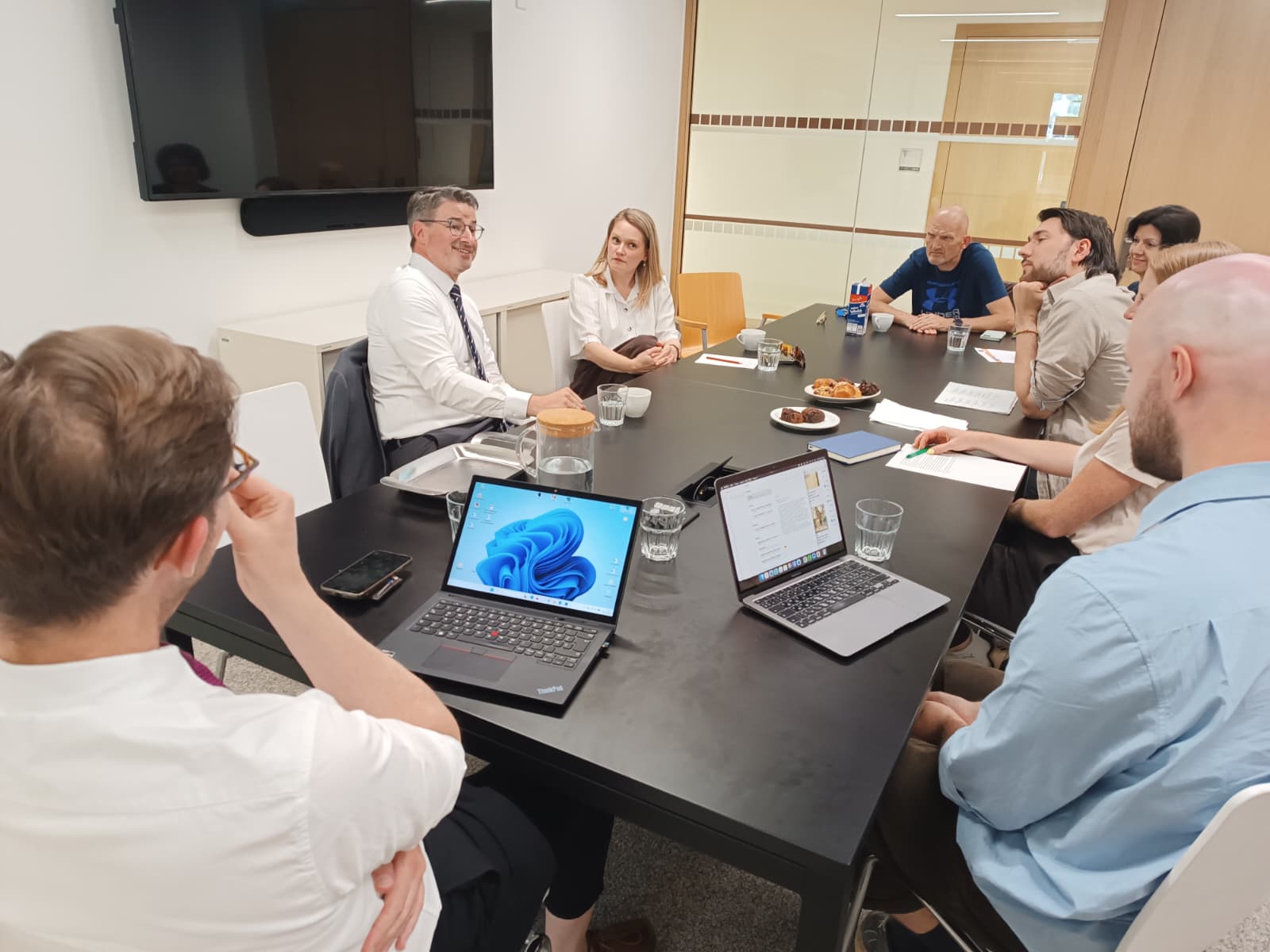
On 8 June 2026, Prof Dr Michaela Wiesinger from the Institute of German Studies (Innsbruck University) visited our SRA. We presented to her in particular those research projects that are closely related to German humanism (Delila Jordan, Ivan Mazhaev, Benedikt Zett), and in turn gained insights into her work, particularly her ERC project “German Arithmetical…
-
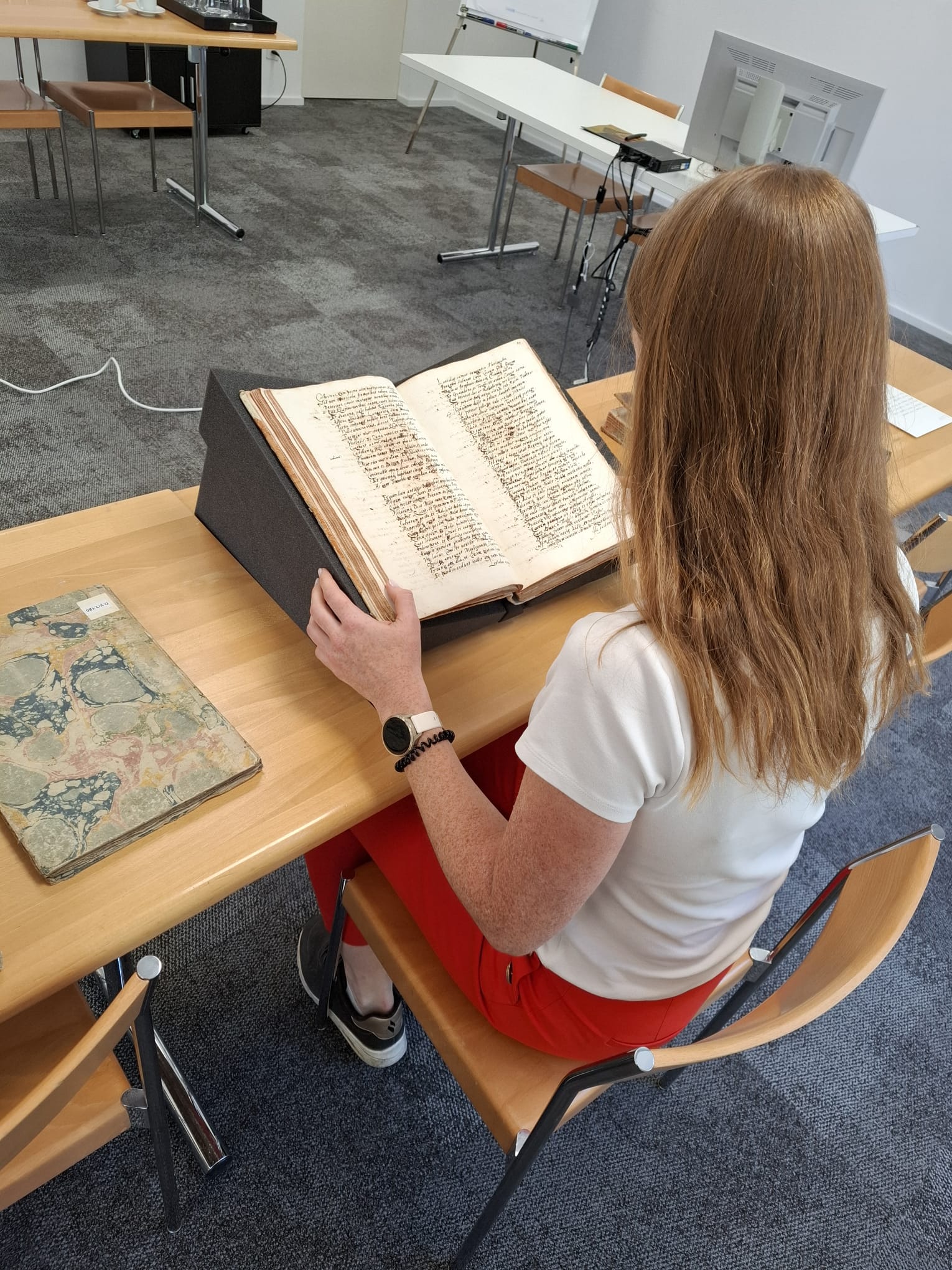
On 27 April 2026, the two members of the Innsbruck-based Lemnius team for the first time visited their project partners, Florian Hitz and Georg Heinzle, at the Staatsarchiv Graubünden in Chur. The meeting provided an opportunity to review the project’s progress and to view manuscripts of the Raeteid as well as relevant secondary literature in…