



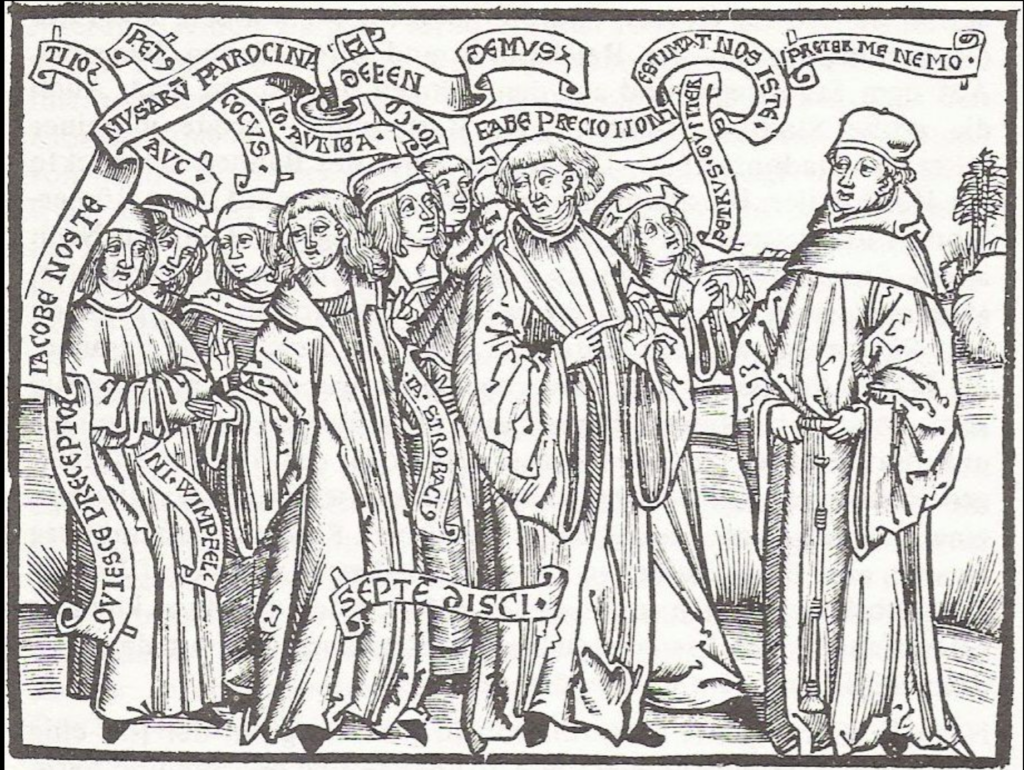
The oral use of today’s vernaculars, familiar to everyone and easy to record, constitutes an extensive field of linguistic research. The results of this research may, with appropriate caution, even be projected back in time to premodern vernaculars. By contrast, the ways in which the world’s historically important languages of culture without native speakers, such as Sumerian, classical Chinese, or also medieval and Neo-Latin, were actually spoken in real-life situations have never been explored. In the absence of first-hand documentation, the oral use of such languages can only be observed in the often-distorting mirror of written sources, which are moreover scarce in many cases.
This subproject aims at mending this situation for early modern Latin, whose oral use is comparably well documented. This goal is attained in three work steps. (1) A source corpus is created on the basis of (a) thematically pertinent works (e.g., textbooks, treatises on pronunciation, travelogues) and (b) the search for pertinent words and combinations of words (text mining, topic modelling) in a thematically unrestricted, very large text body. (2) An overview of the henomenon is given along the following questions: Who speaks and listens to Latin? In which
contexts? How does the oral use of Latin interact with writing and print? How with the use of the vernaculars? How is oral Latin taught? How does the situation develop over time? (3) Comparing the results of step 2 with the oral use of the vernaculars, a preliminary answer is given to the question what it actually means to speak a language without native speakers.
Team Members


Sub Project 3’s Contributions and Activities
No posts were found.