



Researcher in Sub-Project 7
Contact
University of Innsbruck
Department for Classical Philology and Neo-Latin Studies
room 06E010 (6th floor)
Innrain 52a (Ágnes-Heller-Haus)
A-6020 Innsbruck, Austria
email: veronica.papotti@uibk.ac.at
Biography
July 2000: born in Cremona (Italy)
2014-2019: High School diploma (100/100), Liceo Classico “G. Romani” Casalmaggiore (IT)
2019-2022: Bachelor in Humanities (110/110), University of Bologna (IT)
Program in Classics
Dissertation title: Montale, la musica, la poetica: “l’ingenua pretesa di imitare”. (English title: “Montale, Music, and Poetics: ‘the naïve attempt at imitation’”)
Supervisor: Professor S. Colangelo (University of Bologna)
2022-2024: two-year Master in Italian tradition, European perspectives (cum laude), University of Bologna (IT)
Program in Italian studies
Dissertation title: Una lingua in due tempi: il latino e la latinitas di Andrea Zanzotto, Fernando Bandini, e Antonella Anedda. (English title: One language in two times: Latin and Latinitas in Andrea Zanzotto, Fernando Bandini, and Antonella Anedda)
Supervisor: Professor Stefano Colangelo (University of Bologna), Professor Giovanbattista Galdi (Ghent University)
September 2023 – January 2024: Exchange program Erasmus+ at Ghent University (BE)
December 2025 – May 2025: post-graduate stay at Ghent University (BE)
May 2025 – February 2026: Pre-Doctoral researcher in Latin Linguistics at Ghent University (BE) (advisor: Professor Giovanbattista Galdi). Research project: Between characters and spectators: a linguistic analysis of accommodating interaction in Plautus and Terence.
March 2026 – present: Research associate in the project Kanones of Neo-Latin Texts (PI: Florian Schaffenrath), part of the FWF research initiative Neo-Latin in the Modern Word.
March 2026 – present: PhD thesis Presence and Absence: Canon Formation in Neo-Latin Europe through Curricula, Commentaries, and Print (1400–1800) (supervisor: Florian Schaffenrath).
Scientific contributions and engagement
- 2025: member of ΔiaLing – Diachronic and Diatopic Linguistics – Ghent University (BE)
Advanced research training
- July 2025: Summer School in “Methods in Language Sciences”. Ghent University (BE).
- September 2025: 3rd Digital Ancient Near Eastern Studies Conference; Bytes and Bygones – Digital and Computational Analyses of Ancient Cultures.
- October 2025: MAXQDA. Doctoral Course organised by Science Academy.
- January 2026: Bayesian Statistics. Doctoral Course organised by Science Academy.
Research Interests
- Latin linguistics
- Historical sociolinguistics
- Archaic Roman comedy
- Neo-Latin
- Canon formation
- Book history
- Literary traditions
Publications
Conference proceedings
- De-syntagma and its irregular occurrence: the partitive and motion complement in theLex Salica. SUBMITTED. (23rd International Colloquium on Latin Linguistics (ICLL 2025)).
Talks
- April 2025: North American Research Network in Historical Sociolinguistics. 2025 Research Incubator (online). Language and society in ancient comedy: sociolinguistic perspectives on conversational strategies (Pseudolus 574-594, 1246-1270; Adelphoe 88-97).
- May 2025: SIFR, Società Italiana di Filologia Romanza. Lo studio filologico e letterario di un testo oggi: Metodologie e casi di studio,Cagliari (IT). Reframing Plautine comedy through the lens of modern theories: metaphors as adaptive speech.
- May 2025: ΔiaLing – Diachronic and Diatopic Linguistics – Research group in Ghent University (BE). De-syntagma and its irregular occurrence: the partitive and motion complement in the Lex Salica.
- June 2025: 23rd International Colloquium on Latin Linguistics, Udine (IT). De-syntagma and its irregular occurrence: the partitive and motion complement in the Lex Salica.
- January 2026: OIKOS research group Language of Literature – The biennial OIKOS Greek and Latin linguistics conference. Performing Language: interactional strategies in Latin comedy.
- June 2026: Colloque Biennal du Centre Alfred Ernout, Sorbonne Université (FR). Social positioning through personal deixis in Plautus and Terence: comparative insights. – ACCEPTED
- September 2026: 7th International Discourse-Pragmatic Variation and Change Conference, University of Salzburg (AT). Deixis in Interaction: Discourse-Pragmatic Variation and Social Hierarchy in Early Latin Comedy. – ACCEPTED
Veronica Papotti’s Contributions and Activities
-

Veronica Papotti, PhD researcher in Subproject 7 Canons of Neo-Latin Texts, has been awarded a Seminarium Fellowship for the academic year 2027–2028 at Katholieke Universiteit Leuven. Under the supervision of Raf Van Rooy and Nicholas de Sutter, she will investigate the role of Periochae in the formation and transmission of the Neo-Latin dramatic canon in Early…
-
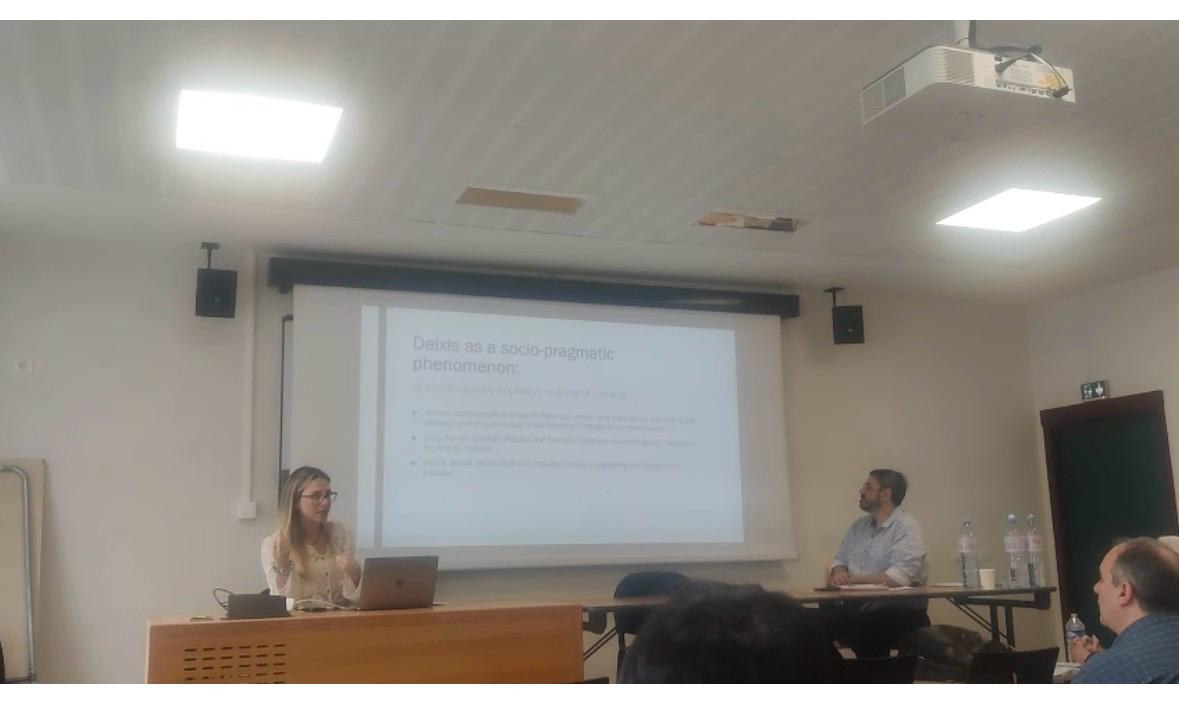
Veronica Papotti, PhD student in Sub Project 7 Kanones of Neo-Latin Texts, participated in the biennial conference L’Approximation en latin, organised by the Centre Alfred Ernout and held at Sorbonne Université (Paris) from 1 to 3 June 2026. During the conference, she presented a paper devoted to the use of deixis in Roman comedy, focusing…
-
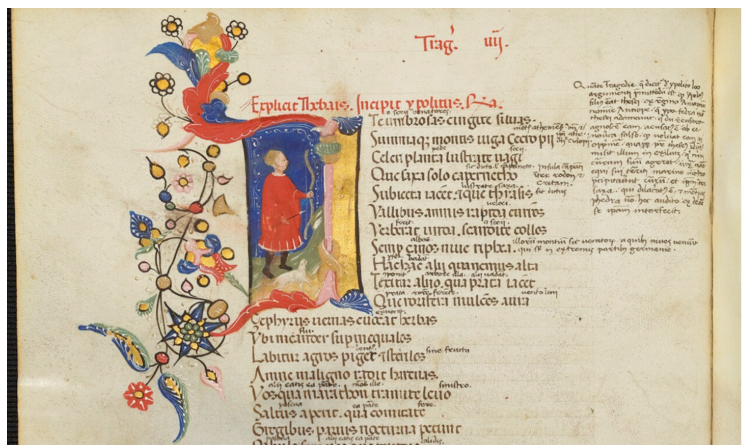
Our researcher Veronica Papotti attended the inaugural meeting of the international network Canons of Latinity, 1150 to the Present, entitled Latin Responses to Horatian Lyric, 1150 to the Present, held in Oxford from 16 to 17 April 2026. The event brought together scholars working on the reception and transformation of Horace across a wide chronological spectrum, fostering…
-
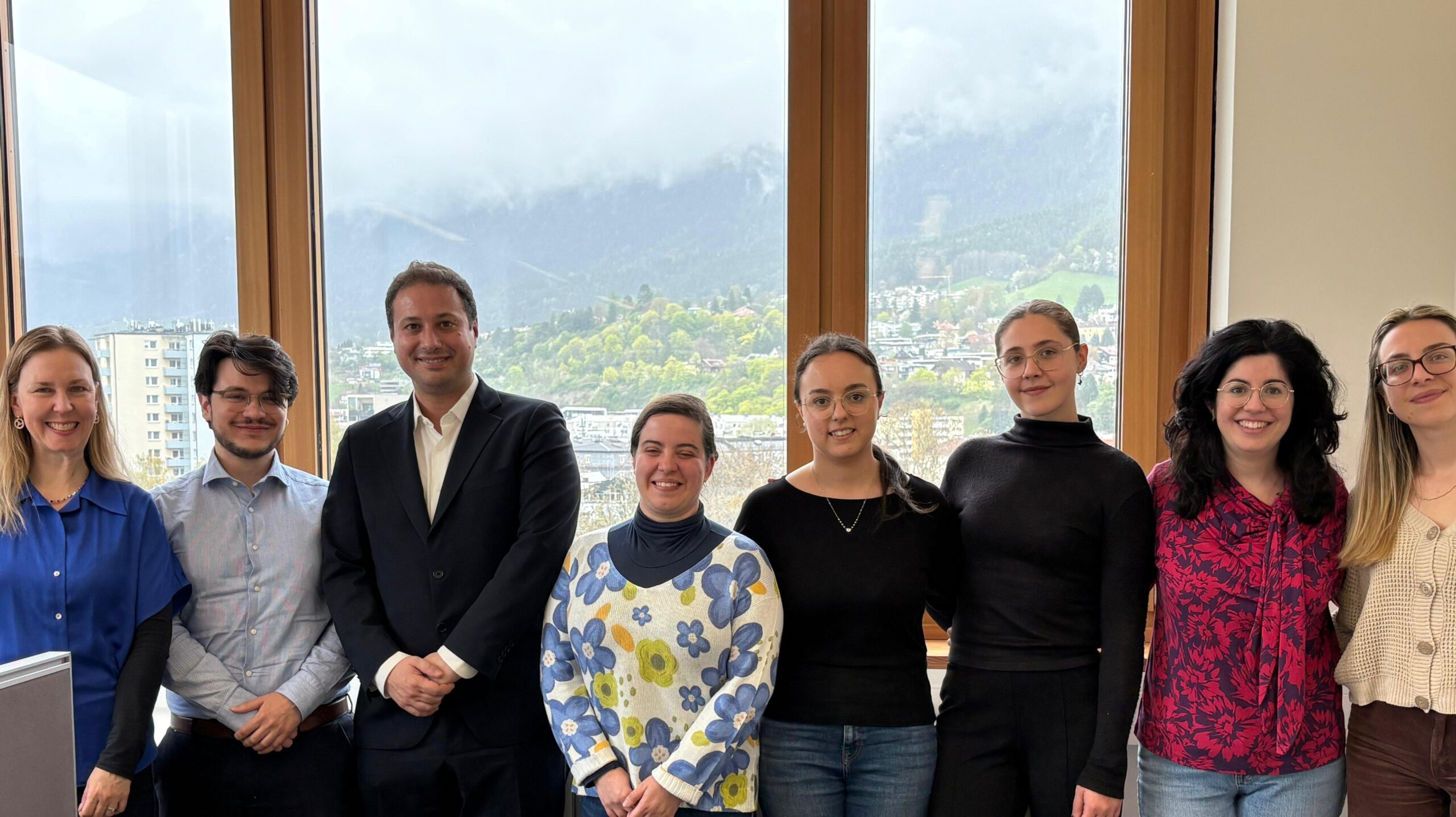
On 14 April 2026, the SRA team had the pleasure of meeting Prof. Paolo Rondinelli (Università Telematica Pegaso), invited to Innsbruck by Prof. Christine Franziska Konecny to give a lecture on his recent critical edition of Francesco Serdonati’s Proverbi Italiani. We are very pleased with the stimulating exchange of ideas and perspectives we had with…
