

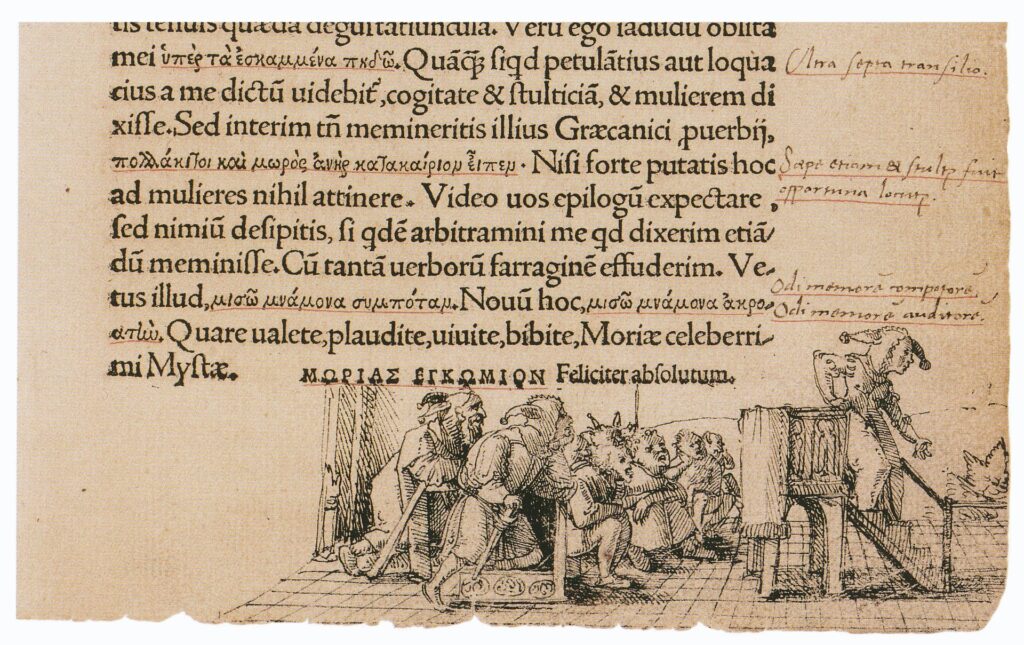
The central place of Greek in the Latin tradition is well-known to Classicists. Such was the extent of Roman interest in Hellenic culture that contact between Greek and Latin became a ‘defining feature’ of late Republican and Imperial Rome. Based on their ancient models, Renaissance humanists reconfirmed Greek alongside Latin as key to cultural perfection. While Latin remained Europe’s scholarly lingua franca, engagement with Greek now also surpassed reading and translation. The resulting production of Greek texts (‘New-Ancient Greek’) in early modernity has only recently attracted sustained attention. An overview of New-Ancient Greek is still lacking. Further, New-Ancient Greek is often seen as limited chiefly to didactics and self-fashioning. The larger role of Ancient Greek, alongside Latin, as a literary force in the early modern world remains uncharted.
In this subproject, a corpus will be complied in (1) a Wikimedia database of c. 1,000 texts representative of periods, locations, genres, and themes. It will be initially compiled based on existing catalogues and studies. The edition of selected texts (2) will use the digital edition tools of READ-COOP. The overview (3) will describe who wrote New-Ancient Greek, where, why, in which genres and in what linguistic forms. The analytical work (4) will draw new conclusions about the significance of New-Ancient Greek. Work packages (3) and (4) employ the approach of literary history. The project offers the first general description and analysis of New-Ancient Greek. Its digital tools will be the first of their kind in the field.
Team Members


Sub Project 2’s Contributions and Activities
-

In the Early Modern period, the need for spoken Latin in academic circles spawned books with Latin dialogues as schoolboy exercises known as colloquia. To a much smaller extent, but with some popularity, Ancient Greek colloquia promoted the ideal of speaking in Greek elegantly. As a contribution to a conference on didactics, Tobias Heiss drew…
-
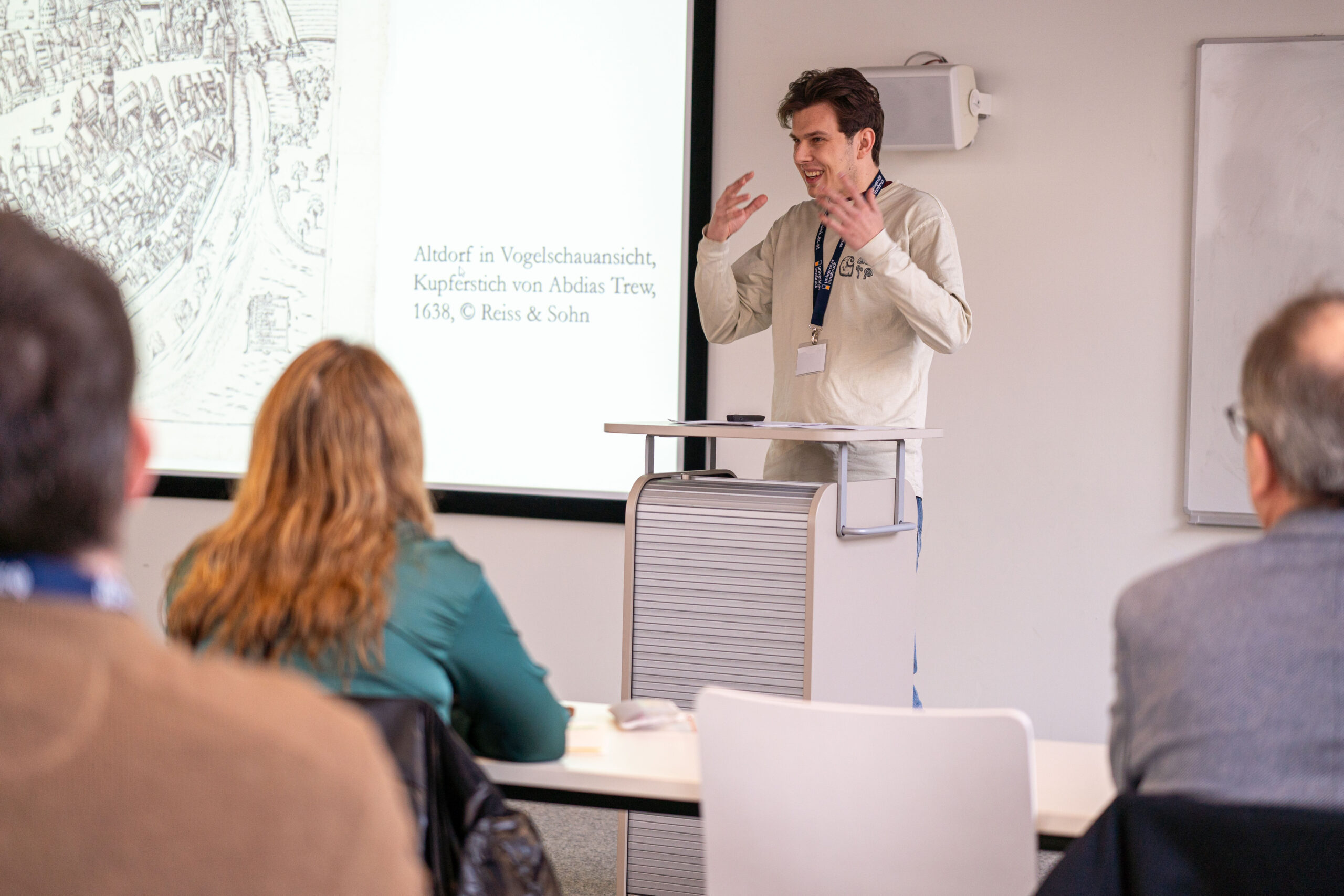
During the turmoil of the Thirty Years’ War, Greek Orthodox officials sought closer ties with important Protestant institutions in Germany and beyond. At the 45th Metageitnia, an annual conference that brings together classical philologists from Austria, Germany, Switzerland and France, Tobias Heiss presented findings from his doctoral research. He linked an oration delivered in Ancient…
-
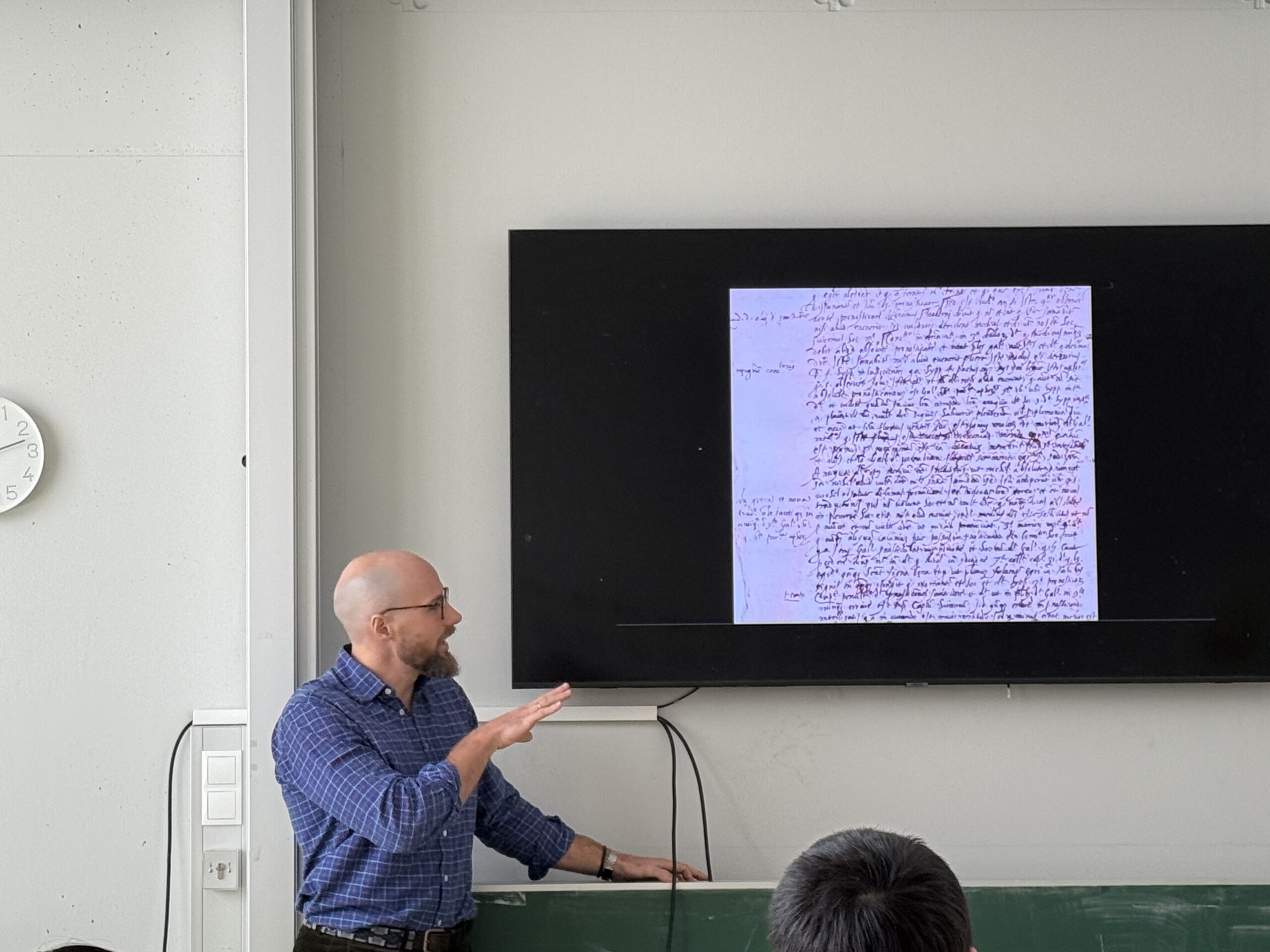
William Barton, one of our principal investigators, sparks enthusiasm for ancient languages in pupils. (12/2026)