




Principal Investigator of Sub-Project 6
Contact
University of Innsbruck
Department for Classical Philology and Neo-Latin Studies
room 06H040 (6th floor)
Innrain 52a (Ágnes-Heller-Haus)
A-6020 Innsbruck, Austria
phone: +43 512 507-40705
email: patryk.ryczkowski@uibk.ac.at
Biography
CV
- 1989: born in Koszalin (Poland)
- 2008: Advanced Levels, I Liceum Ogólnokształcące im. Stanisława Dubois, Koszalin
- 2008–2013: MA in Law, Jagiellonian University, Cracow
- 2009–2014: BA and MA in Classics (Latin/Greek), Jagiellonian University, Cracow
- 2013–2014: Erasmus stay (Latin studies), Albert-Ludwigs-Universität, Freiburg i.Br.
- 2014–2018: PhD in Latin Philology of the Middle Ages and the Modern Era, Georg-August-Universität Göttingen
- 11/2018–5/2019: Research Fellow, Ludwig Boltzmann Institute for Neo-Latin Studies, Innsbruck
- 1/2020–3/2020: Research Fellow, German Historical Institute, Warsaw
- 4/2020–2/2025: Project Associate (Postdoc), project Caelestis Hierusalem Cives. The Role and Function of the Latin Hagiographic Epic in Early Modern Saint-Making, Leopold-Franzens-Universität, Innsbruck
- From 2/2024: University Assistant (Postdoc), Leopold-Franzens-Universität, Innsbruck
- 2/2024–12/2024: Key Researcher, Programme Line Intellectual History, Ludwig Boltzmann Institute for Neo-Latin Studies, Innsbruck
- From 3/2025: Marie Skłodowska-Curie Postdoctoral Fellow (MSCA PF) and Principal Investigator, project Catholic Inculturation of the Uniate Church: Basilian Hagiography of the 17th and 18th Centuries, Vilnius University
- From 1/2026: Principal Investigator, Special Research Area Latin in the Modern World, subproject 6 Neo-Latin and the Newcomers: Catholic Inculturation(s), Leopold-Franzens-Universität, Innsbruck
(Co-)Acquired Third-Party Funding
- From 1/2026: Austrian Science Found (FWF) Special Research Area Neo-Latin in the Modern World, subproject (SP6) Neo-Latin and the Newcomers: Catholic Inculturation(s)
- From 3/2025: Marie Skłodowska-Curie Postdoctoral Fellow (MSCA PF) Catholic Inculturation of the Uniate Church: Basilian Hagiography of the 17th and 18th Centuries
- 4/2020–3/2025 (co-authorship, with Wolfgang Kofler): Austrian Science Found (FWF) stand-alone project Caelestis Hierusalem Cives. The Role and Function of the Latin Hagiographic Epic in Early Modern Saint-Making
Organisation of Workshops and Conferences
- 15–17.10.2026: Hagiographic Identities: Catholic Communities and Their Saints in Early Modern Times, Vilnius University, Vilnius
- 26.7-1.8.2026: Aurora Summer School, NeoLEMoS – Neo-Latin for Early Modern Studies, University of Innsbruck
- 21–23.6.2023: How to Write (about) a Saint? Strategies of Profiling Saints and Candidates to Sanctity in Early Modern Literature, Biblioteca Angelica, Rome
- 20.10.2022: CHC meets GLOBECOSAL. Online Workshop on Early Modern Sanctity, with the team of the ERC/SNSF project Global Economies of Salvation. Art and the Negotiation of Sanctity in the Early Modern Period, Zurich University
Research Interests
- Generic poetics of epyllion in Late Antiquity, Middle Ages and Early Modern times
- Middle Latin and Neo-Latin epic poetry, in particular biblical and hagiographic poems
- Biblical Poetry in Middle Ages and Early Modern times
- Early Modern hagiography and cult of saints
- Polish and Latin literature from the historical space of the Polish-Lithuanian Commonwealth, in particular considering interconfessional and intercultural relationships
- Basilian Order and its literature
Publications
- Book:
- Das mittellateinische Epyllion. Studien zur Kleinform der epischen Dichtung im Mittelalter, Bern [et al.]: Peter Lang, 2021 (Lateinische Sprache und Literatur des Mittelalters, vol. 53).
- Contributions:
- The Making of a Saint through the Lenses of (Panegyrical) Poetry: Aleksander Walenty Szlachtowicz’s Tryumph duchowny (1628) and Josaphat Kuntsevych’s First processus in partibus, in: Ivan Almes, Nataliia Fedyshyn, Salvijus Kulevičius (eds.), The Making and Remembering of Saint Josaphat Kuntsevych, 17th–20th Century (= Lietuvos istorijos studijos, Sonderheft 16), Vilnius 2025, p. 184–213.
- Poesis perfecta? Sarbiewskis Vorlesungen zur epischen Dichtung und die Josaphatis von Josaphat Isakowicz (1628) als Beispiel für hagiographische Epik im Barock, in: Beate Hintzen (ed.), Lateinische Literatur des Barock – Inhalte, literarische Formen und Funktionen, Paderborn 2025, p. 283–307 (Poesis, vol. 3).
- Praesidium non futile. Die jesuitische Aneignung der hagiographischen Legende über die Blutreliquie der Thebäischen Legion in der Mauritias von Louis Cellot (1628), in: Maren Elisabeth Schwab, Stefan Feddern, Jochen Schultheiß, Andreas Schwab (eds.), The Poetics of Things Past / Gedichtete Geschichtsdinge. Transmission of Knowledge in Verse from Antiquity to Early Modern Times, Baden-Baden 2025, p. 87–113.
- A Failed Work? Gregor of Sambor’s Biblias and his Biblical Poems (hymni) from the Bibliados feria seu tabula I (1566), in: Humanistica Lovaniensia 73 (2024), p. 371–413.
- The Triumph Of the Saint: St. Casimir Jagiellon and the Militant Motifs in Baroque Hagiographical Poetry, in: Jacqueline Glomski, Gesine Manuwald, Andrew Taylor (eds.), Baroque Latinity: Studies in the Neo-Latin Literature of the European Baroque, London 2023, p. 51–67.
- Like a Phoenix into the Ashes: Christological and Jesuit Profile of Uniate Martyrdom in Andrzej Młodzianowski’s Emblematic Vita (1675) of Josaphat Kuntsevych (1580–1623), in: Elisa Frei, Eleonora Rai (eds.), Profiling Saints: Images of Modern Sanctity in a Global World, Göttingen 2023, p. 345–370.
- Consortia palmae. Die referentielle Inszenierung der Aufnahme des Johannes von Nepomuk in den Heiligenkreis in der Nepomuceneis von Matteo Eudocio Persico, in: Ramona Hocker, Werner Telesko (eds.), Johannes von Nepomuk. Kult – Künste – Kommunikation, Vienna 2023, p. 171–189.
- A Farmer Who Does Not Want to Be a Poet: The Motif of recusatio in the Compositional Structure of Sarbiewski’s Ode IV 4, in: Ałła Brzozowska, Mariusz Plago (eds.), Ars recusandi. Odmowa jako zabieg literacki w tekstach greckich i łacińskich od starożytności do końca XVIII wieku, Warsaw 2022, p. 159–174.
- Finis Ianitii? Mikołaj Lubomirski’s supplementum to Klemens Janicki’s Vitae regum Polonorum, in: Terminus 24 (2022), issue 1 (62), p. 55–91.
- Paraphrasis historiae de Susanna by Adamus Placotomus Silesius and the ‘raptularius’ (notebook) of Mikołaj Lubomirski, in: Neulateinisches Jahrbuch 23 (2021), p. 177–210.
- Caelestis Hierusalem Cives. The Role and Function of the Latin Hagiographic Epic in Early Modern Saint-Making: An Introduction to a New Research Project, in: Neulateinisches Jahrbuch 23 (2021), p. 292–299.
- Longas carpere perge uias. Rola wędrówki jako Owidiuszowego remedium amoris w strukturze kompozycyjnej Nadobnej Pasqualiny Samuela Twardowskiego, in: Terminus 20 (2018), issue 3 (48), p. 311–350.
- Między biblijną Zuzanną a Zuzanną Jana Kochanowskiego. Kontekstualizacja Historia Susannae Jeremiasza Wojnowskiego (1567), in: Studia classica et neolatina 16 (2018), p. 22–40.
- Susannas verlorene Stimme. Das Gedicht Versus de sancta Susanna: Erstedition und Analyse, in: Mittellateinisches Jahrbuch 52 (2017), p. 400–425.
- Viae aequoreae. Morskie tło miłości Herony i Leandra w opowieściach Owidiusza i Muzajosa, in: Dominika Lewandowska, Kamila Marciniak, Hanna Rajfura (eds.), Navigare necesse. Morze – Podróż – Przejście – Przemiana, Warsaw 2015, p. 51–71 (ΣΧΟΛΗ, vol. 10).
- Ecce mihi lacerae dictant scribenda Camenae. Więzienne świadectwo Boecjusza, in: Nowy Filomata 16 (2012), p. 171–183.
- Annotated translations:
- Anna Maria Wasyl (ed.), Blozjusz Emiliusz Drakoncjusz, Dzieła, 2 vol., Cracow 2025 (Hortus Philologiae) – annotated translation into Polish of Dracontius’ Romulea V (Controversia de statua viri fortis), vol. 1, p. 186–205 and 363–373, Romulea IX (Deliberat Achillis, an corpus Hectoris vendat), vol. 1, p. 258–269 and 393–397 as well as of the Aegritudo Perdicae, vol. 2, p. 386–401 and 413–420.
- Popular scientific contributions:
- Vilnius ir unitų bažnyčia: pokalbis su dr. Patryku Ryczkowskiu / From Vilnius to the World: An Interview with Dr. Patryk Ryczkowski on Reunification of Christianity in Early Modern Europe, an interview for the Vilnius University website published bilingually on 15.1.2025, conducted in English and translated into Lithuanian by Gintarė Bidlauskienė, https://www.vu.lt/en/news-events/news/from-vilnius-to-the-world-an-interview-with-dr-patryk-ryczkowski-on-reunification-of-christianity-in-early-modern-europe [last accessed 30.1.2025].
- Unitų paveldas: šventieji ir jų pasakojima, an interview for Naujasis Židinys-Aidai 100.8 (2024), p. 13–16, conducted in English and translated into Lithuanian by Eleonora Terleckienė.
- Epidemic, Saint, and Epic Poetry: Verse Hagiography in the Baroque Period, blog issue for Baroque Latinity AHRC-funded research network, May 2020, https://www.ucl.ac.uk/classics/research/research-projects/baroque-latinity [last accessed 12.1.2023].
- Book reviews:
- Alexander Herböck (ed.), Ioannes Porterius Nivernas. Athamantis Furor. Eine neulateinische Tragödie. Textausgabe, Übersetzung und Interpretation, Berlin / Boston 2021, in: Gnomon 97 (2025), issue 2, p. 316–320.
- Christian Peters (ed.), Basinio da Parma, Hesperis. Der italische Krieg, Heidelberg 2021, in: Editionen in der Kritik. Editionswissenschaftliches Rezensionsorgan 12 (2024), p. 179–185.
- Walter Berschin, Angelika Häse (eds.), Gerhard von Augsburg, Vita Sancti Uodalrici. Die älteste Lebensbeschreibung des heiligen Ulrich, lateinisch – deutsch. Mit Kanonisationsurkunde von 993, Heidelberg 22020, in: Editionen in der Kritik. Editionswissenschaftliches Rezensionsorgan 12 (2024), p. 108–114.
- Susanne Spreckelmeier, Bibelepisches Erzählen vom ‘Transitus Mariae’ im Mittelalter. Diskurshistorische Studien, Berlin / Boston 2019, in: Mittellateinisches Jahrbuch 57 (2022), p. 322–327.
Talks
- Neo-Latin and Hagiography: Between Literature and Cult [30.07.2026, Aurora Summer School, NeoLEMoS – Neo-Latin for Early Modern Studies, University of Innsbruck].
- Rosa autumnalis: topika hagiograficzna w dziełach o Jozafacie Kuncewiczu. Między retoryką a pragmatyką kultu [25.05.2026, guest lecture for Pracownia Literatury Antyku, Tradycji Antycznej i Nowoczesności / Laboratory for Ancient Literature, Classical Tradition, and Modernity (PLATAN), Jagiellonian University Cracow].
- Iosaphat redux: Josaphat Kuntsevych’s Relics through the Lens of the Translation Reports (1667) [19.05.2026, presentation at the 15th REFORC annual conference: Early Modern Christian Materiality, in the framework of the self-organised panels: Materiality of the Saints: The Relics and Saints’ Representation across Confessions and Literary Genres, University of Wrocław / Universität zu Köln / Rheinische Friedrich-Wilhelms-Universität Bonn, Wrocław].
- Hagiograficzna propaganda: strategie upowszechniania kultu Jozafata Kuncewicza w XVII wieku [18.05.2026, guest lecture for Polskie Towarzystwo Filologiczne / Polish Philological Association (PTF), Branch in Wrocław, University of Wrocław].
- From an idea to the research funding: the proposals for third-party funding and how to approach them [19.01.2026, invited presentation in the framework of the LARC (LAUTE Academic Research Colloquium), Vilnius University, Vilnius].
- Rethinking Sarbievius: A Few Remarks on the Composition of His Lyric Collection [26.09.2025, invited presentation at the international conference: BaroCon 2025. Ratio, affectus, sensus: Literary Culture of the Baroque in the Grand Duchy of Lithuania, Vilnius University, Vilnius].
- Early Modern Hagiography Between Confessional Cultures and Languages: Josaphat Kuntsevych’s vita in the Basilian Menology [18.07.2025, presentation at the 19th Congress of the Association for Neo-Latin Studies (IANLS): Neo-Latin, Language and Languages, Aix-Marseille Université, Aix-en-Provence].
- The land of all saints and martyrs: New Jerusalem (caelestis Hierusalem) in early modern hagiographic discourse [12.06.2025, invited presentation at the internationalconference: Nouvelles voies des études sur la Renaissance organised by: Fédération Internationale des Sociétés et Instituts pour l’Étude de la Renaissance (FISIER), Paris].
- Iosaphat Basilianus: Bazylianie jako promotor i beneficjent hagiografii Jozafata Kuncewicza [30.05.2025, presentation at the international conference: The Grand Duchy of Lithuania: Unity In Diversity / Lietuvos Didžioji Kunigaikštystė: vienybė įvairovėje / Вялікае Княства Літоўскае: адзінства ў разнастайнасці, European Humanities University, Vilnius].
- Saulus vel Paulus of the Ruthenian union (1596): Jakub Jan Susza’s figure of Meletius Smotrycky [11.04.2025, presentation at the conference: After the Reformation: Pauline Exegesis in the Early Modern Period, Universität Zürich / Université de Genève, Zürich].
- Pontifex Sarmata: die Gedichte des Petrus Maurus Roysius (ca. 1505–1571) für und über Samuel Maciejowski, Bischof von Krakau (1546–1550) [07.02.2025, presentation at the DNG-Tagung: Die neulateinische Literatur im Zeitalter des Erasmus, Westfälische Wilhelms-Universität Münster].
- Uniate Church between Vilnius and Rome: Josaphat Kuntsevych in the Hagiographic Sources of the Mid-Seventeenth Century [16.5.2024, presentation at the 13th annual conference of the REFORC: Early Modern Encounters: Religions, Cultures and Societies, Fondazione per le scienze religiose / Bibliothek Giorgio La Pira, Palermo].
- Neo-Latin Epic Poetry and Early Modern Saint-Making: Rethinking the Working Definition of Tridentine Hagiography [5.3.2024, invited guest lecture in the framework of the research colloquium Staročeský dýchánek at the Czech Academy of Sciences, Prague].
- Novus sol? The Cult of Josaphat Kuntsevych between the Polish-Lithuanian Commonwealth and Rome in Latin Hagiographical Sources of the 17th Century [14.11.2023, invited presentation at the international conference: Identity and Cult: Theological, Cultural and Historical Dimensions of Josaphat Kuntsevych, Ukrainian Catholic University Lviv / Pontificio Istituto Orientale Roma / Catholic University of America / Basilian Order of St Josaphat / Lithuanian Embassy to the Holy See / Church Heritage Museum in Vilnius, Rome].
- Making a Saint through the Lenses of Poetry: Kuntsevych’s First processus in partibus and His Verse Hagiography [13.10.2023, invited presentation at the international conference: Josaphat Kuntsevych: History, Heritage, Memory. Commemorating the 400th Anniversary of the Martyrdom of Saint Josaphat, Vilnius University / Ukrainian Catholic University Lviv / Lithuanian Ministry for Culture, Department for Cultural Heritage, Vilnius].
- Hagiographischer Austausch zwischen Italien und Böhmen. Matteo Eudocio Persicos Epos auf Johannes von Nepomuk (ca. 1759/1773) und seine Quellen [21.9.2023, international conference: 400 Anniversarium Provinciae Bohemiae Societatis Jesu, Charles University Prague].
- Warum kommt das Blut aus der Erde hervor? Jesuitische Instrumentalisierung der hagiographischen Legende über die Reliquien der Thebanischen Legion in der Mauritias von Louis Cellot (1628) [13.7.2023, invited presentation at the international conference: The Poetics of Things Past: Transmission of Knowledge in Verse from Antiquity to Early Modern Times / Gedichtete Geschichtsdinge. Wissensvermittlung in Versen von Antike bis Früher Neuzeit, Christian-Albrechts-Universität zu Kiel / Excellence Cluster ROOTS, Kiel].
- Found in translation? One martyrdom, two redactions of the Basilian menology, and two versions of Josaphat Kuntsevych’s vita [10.5.2023, invited lecture at the research colloquium Senosios literatūros seminaras (26), Lietuvių literatūros ir tautosakos institutas, Vilnius].
- Is there a Limit to Suffering? St. Jerome and the Basilian Approach to Early Modern Martyrdom and Devotion [28.4.2023, presentation at the 7th international conference: Antiquitas viva. Encounters across languages, texts, cultures, University of Latvia, Riga].
- Wie macht man einen Heiligen? Die Darstellung von Josaphat Kuntsevych in seiner emblematischen Vita von Andrzej Młodzianowski (1675) [29.11.2022, invited guest lecture in the framework of the lecture series: Positionen der Literaturwissenschaft (organisation Prof. Dr. Sebastian Donat), Leopold-Franzens-Universität Innsbruck].
- Why did early modern epic poetry glorify the medieval saints? St. John of Nepomuk in the Nepomuceneis Persico’s [23.9.2022, presentation at the International Middle Latin Congress Medialatinitas IX: Nostalgia in/and the Middle Ages, Charles University Prague].
- The Role of Epic Poetry in Early Modern Saint-Making (Sébastien Rouillard, Hagiopoea, 1611) [1.8.2022, presentation at the 18th Congress of the Association for Neo-Latin Studies (IANLS): Half a Century of Neo-Latin Studies, Katholieke Universitet, Leuven].
- Hagiographische Epik im Barock. Die Josaphatis (1628) und Sarbiewski’s Theorie des Epos [7.7.2022, presentation at the international conference: Lateinische Literatur des Barock, Rheinische Friedrich-Wilhelms-Universität Bonn].
- Saint’s body and soul separated: approaches to the hagiographical motif [5.5.2022, presentation at the 11th annual conference of the REFORC: Body and Soul. Comparative Studies on the Body-Soul Concept in the Pre-Modern Era, Freie Universität Berlin].
- Guerrieris Ignatias und die Tradition der Ignatius-Epik [11.3.2022, invited presentation at the annual conference of the Jesuitica Association, Bad Schönbrunn ob Zug].
- Before the Metropolia: the epic narrative of Jozafat Kuncewicz and the transition to the Uniate Church in Poland-Lithuania [6.11.2021, presentation at the international workshop: The Kyiv Church Metropolia Searching for Its Identity in the 16th–18th Centuries, Ludwig-Maximilians-Universität München (online)].
- Verse hagiography in the Baroque: the case of St. Casimir Jagiellon [18.9.2021, presentation at the international conference: Baroque Latinity, The Society for Neo-Latin Studies / The Cambridge Society for Neo-Latin Studies, Cambridge / London (online)].
- Die Inszenierung der Heiligkeit des Johannes von Nepomuk in der Nepomuceneis Persicos [9.6.2021, presentation at the international conference: Johannes von Nepomuk. Kult – Künste – Kommunikation, Österreichische Akademie der Wissenschaften, Vienna (online)].
- Zuzanna i starcy w obliczu prawa. O poemacie biblijnym Paraphrasis historiae de Susanna z tzw. raptularza Mikołaja ubomirskiego [28.2.2020, invited guest lecture at the Laboratory of Renaissance Literature, Jagiellonian University Cracow / Palace of Bishop Erasmus Ciołek – Department of the National Museum in Cracow].
- Zur Pragmatik der poetischen Heiligkeitskonstruktion von Jozafat Kuncewicz im Kontext der Kirchenunion von Brest (1596) [19.2.2020, lecture in the framework of the research colloquium at the German Historical Institute Warsaw = 24.02.2020, invited guest lecture (in Polish), Warsaw University].
- Fertilis accola? Motyw recusatio w odzie IV 4 Macieja Kazimierza Sarbiewskiego [23.11.2019, presentation at the conference: Ars recusandi. Odmowa jako zabieg literacki w tekstach greckich i łacińskich od starożytności do końca XVIII w., Wrocław University].
- Susanna im Bade – Susanna im Gedicht. Zur literarischen Technik der biblischen Nacherzählung in der Paraphrasis historiae de Susanna [23.1.2019, final talk at the Ludwig Boltzmann Institute for Neo-Latin Studies Innsbruck].
- Kontekstualizacja Historia Susannae Jeremiasza Wojnowskiego [17.10.2017, presentation at the conference: VII Colloquium Neolatinum, Gdańsk University].
- Die Funktionalisierung der Apostrophe in der episierenden Kleindichtung [16.9.2017, presentation at the 4th workshop of the Arbeitsgemeinschaft Lateinisches Mittelalter (AGLMA), Vienna University].
- Respublica victrix? Albertino Mussato über die Paduaner Kommune [23.9.2016, presentation at the (post)-doc-workshop: Wissensordnungen und Argumentationsmuster des Politischen im späten Mittelalter und in der frühen Neuzeit, Universität Trier].
- Das Susanna-Gedicht des Alanus von Melsa: Biblische Versifikation als ein Epyllion? [12.9.2015, presentation at the 3rd workshop der Arbeitsgemeinschaft Lateinisches Mittelalter (AGLMA), Westfälische Wilhelms-Universität Münster].
- Viae aequoreae. Morskie tło miłości Herony i Leandra w opowieściach Owidiusza i Muzajosa [11.3.2013, presentation at the student conference: IX SKS: Navigare necesse. Morze – Podróż – Przejście – Przemiana, Gdańsk University].
Patryk Ryczkowski’s Contributions and Activities
-

Patryk M. Ryczkowski, PI in the Sub-Project 6 Neolatin and the Newcomers and currently also a MSCA Postdoctoral Fellow at the Vilnius University, participated in the conference Book Culture in the 17th–18th Centuries in the Polish–Lithuanian Commonwealth held at the Ossolineum library in Wrocław (28–29 September 2026). He delivered a paper devoted to Ignacy Kulczyński’s…
-
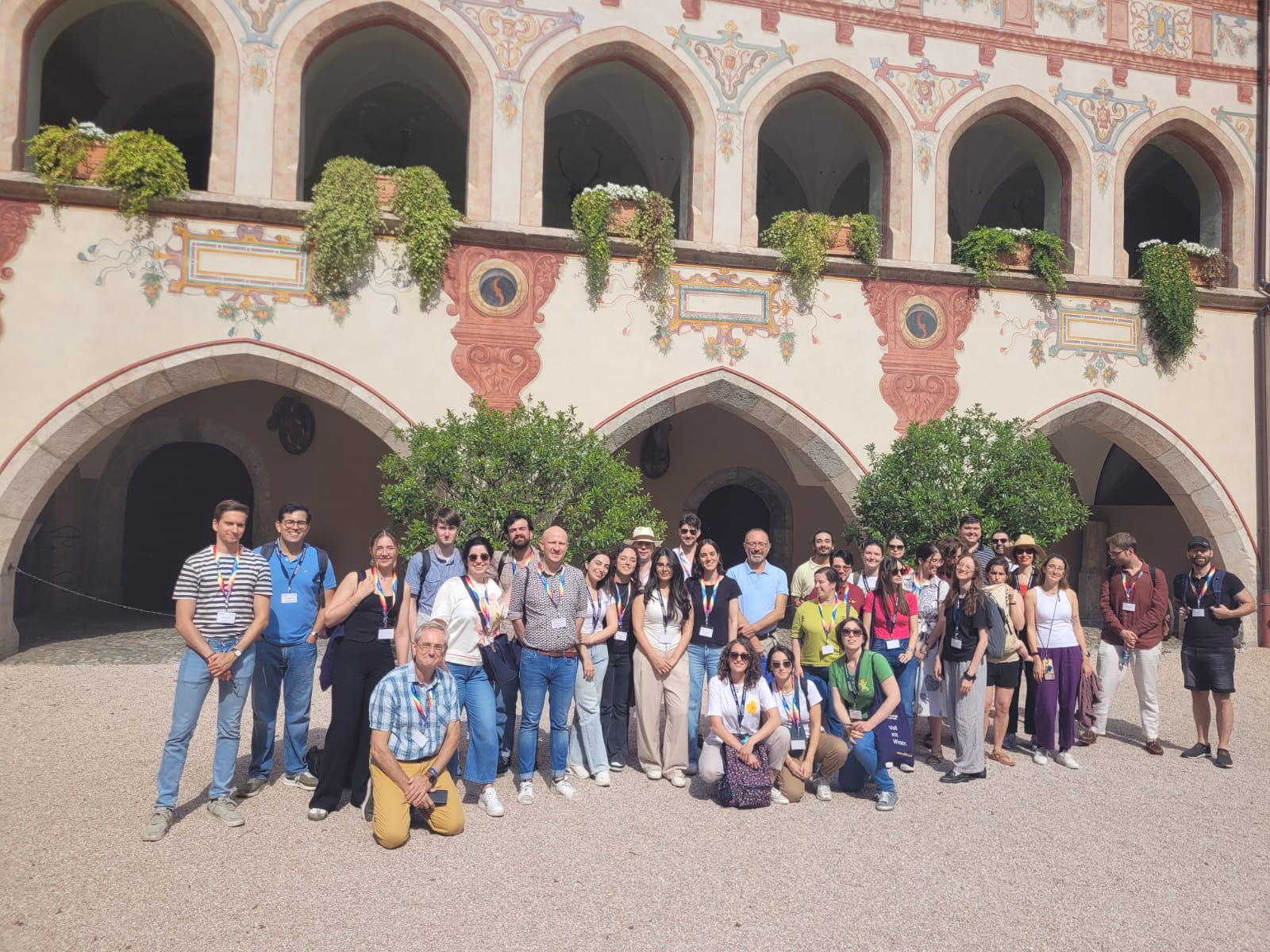
From July 26 to August 1, 2026, we hosted the Aurora Summer School “NeoLEMoS” (Neo-Latin for Early Modern Studies), organized by Federica Rossetti and Patryk Ryczkowski in collaboration with Vrije Universiteit Amsterdam and Università degli Studi di Napoli Federico II. The event brought together students and lecturers from ten European countries, fostering a lively and…
-
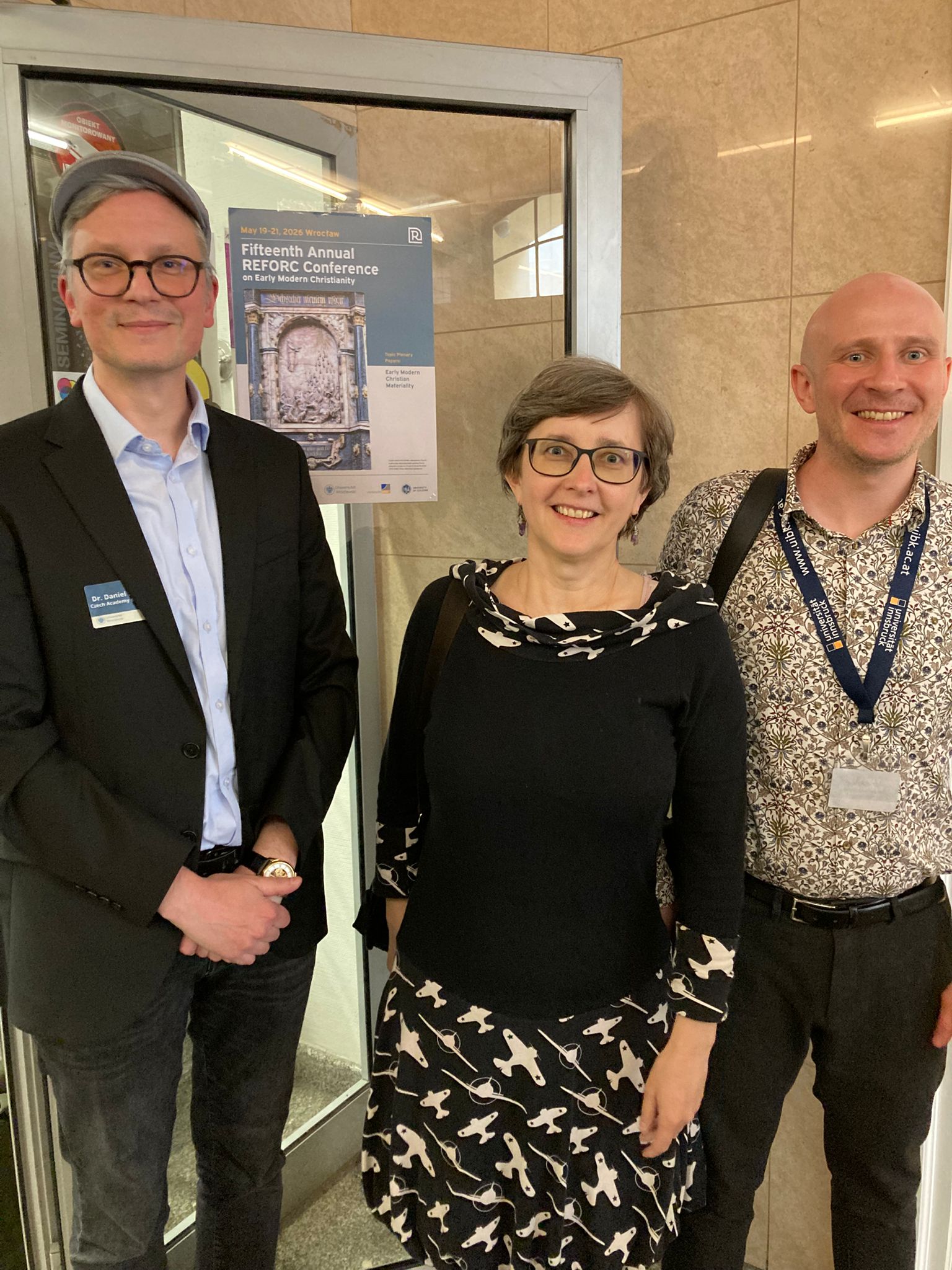
Patryk M. Ryczkowski, PI in the Sub-Project 6 Neolatin and the Newcomers and currently also a MSCA Postdoctoral Fellow at the Vilnius University, participated in the 15th annual REFORC conference in Wrocław from 19 to 21 May 2026. Pursuing the leading topic of the Christian materiality, he organised a panel devoted to the material representations…
