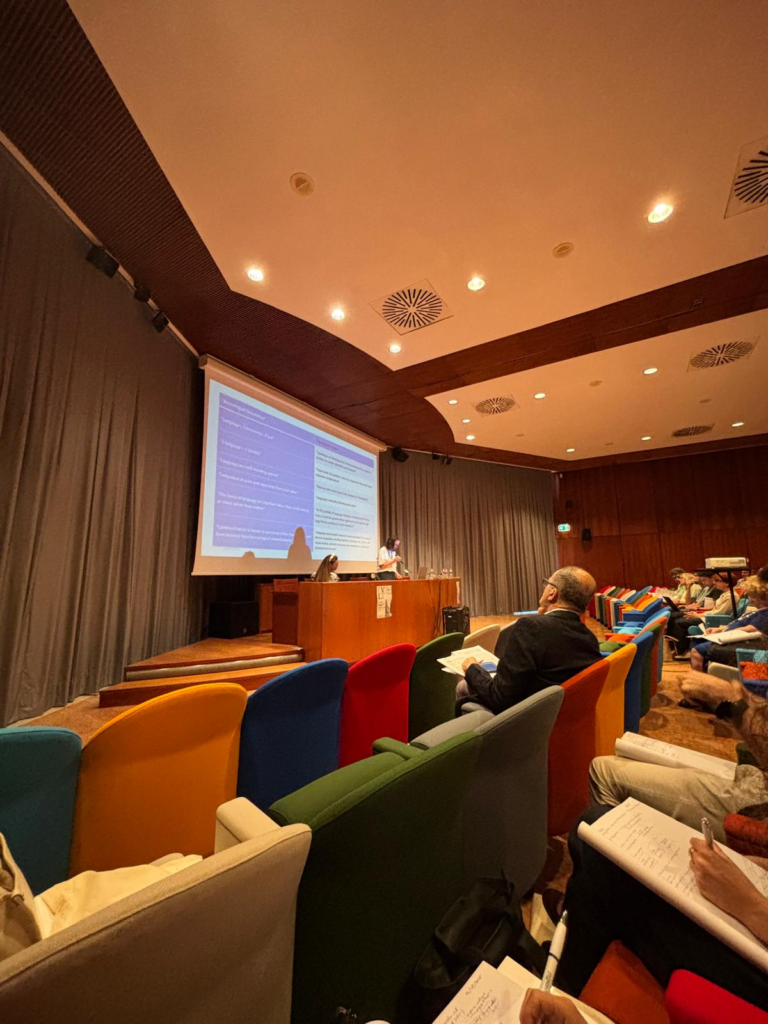


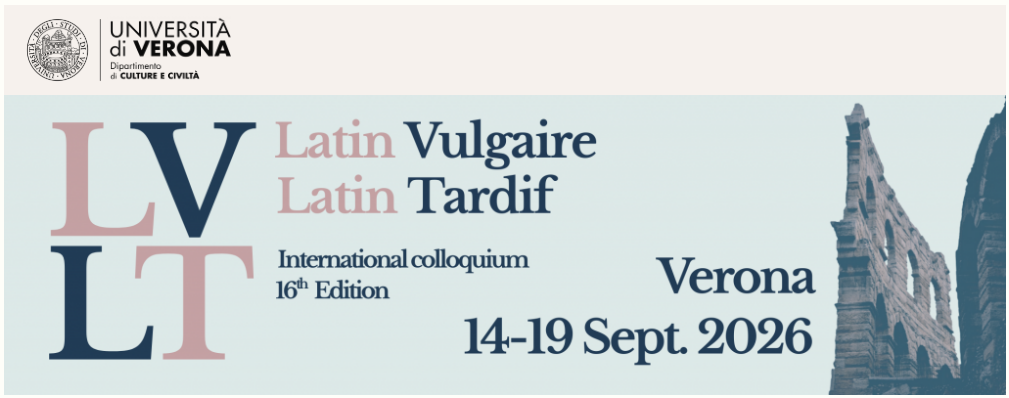
Veronica Papotti, PhD student in Sub Project 7 Kanones of Neo-Latin Texts, participated in the international conference Latin vulgaire – latin tardif (LVLT), held at the University of Verona from Monday 14 to Friday 18 September 2026. The conference brings together linguistic and philological approaches to Latin, with particular attention to linguistic variation and to forms of Latin that provide insight into spoken usage and different sociolinguistic dimensions of the language.
Our researcher presented a paper entitled Performing Language: Interactional Strategies in Latin Comedy, which approached demonstratives in Roman comedy from a sociolinguistic and pragmatic perspective. The analysis focused specifically on the speech of slaves and, more broadly, on the linguistic representation of socially subordinate characters. It was based on a restricted corpus consisting of Plautus’ Bacchides and Terence’s Adelphoe, where demonstratives occur with particularly high frequency.
The paper investigated how demonstrative choice interacts with the social and epistemic hierarchies governing dramatic dialogue. Particular attention was paid to moments in which the socially subordinate position of slave characters is reversed at the linguistic and interactional level: despite their lower social status, slaves may temporarily occupy a position of epistemic or communicative advantage, and this reversal can be traced through specific linguistic patterns in their use of demonstratives. The study thus explored how linguistic choices contribute to the construction—and temporary reconfiguration—of social relationships on the Roman comic stage.
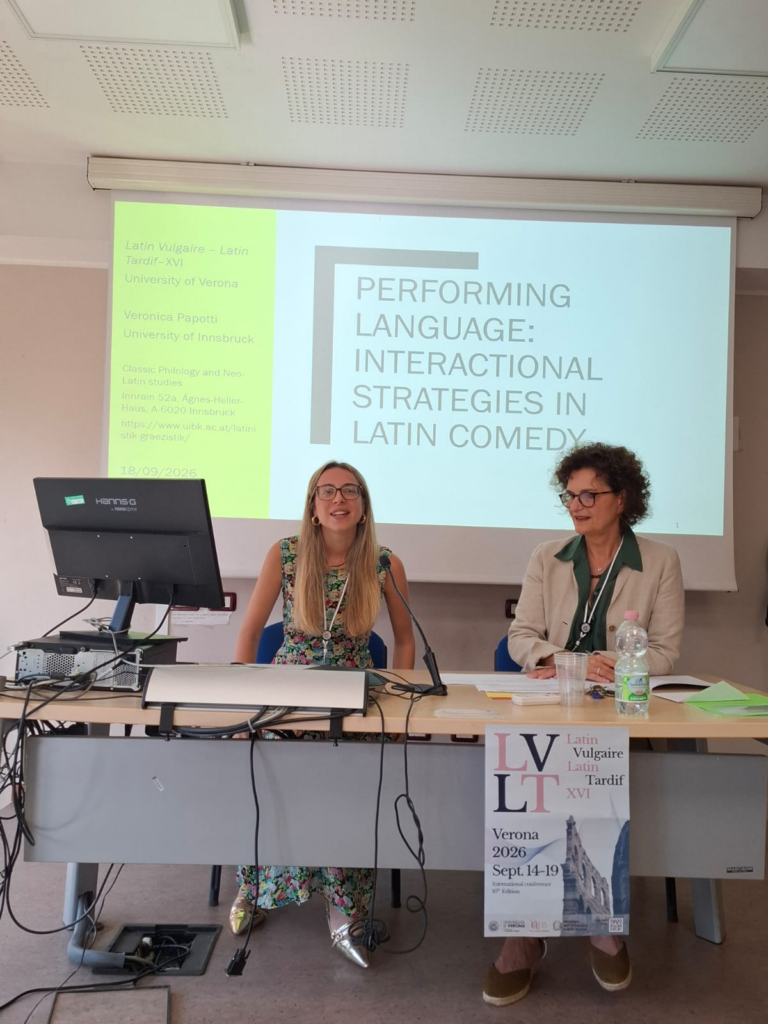
Participation in the 16th Edition of LVLT provided an opportunity to discuss these findings within a scholarly environment in which philological analysis and linguistic approaches are closely integrated, and to develop further perspectives on the relationship between deixis, social hierarchy, and interaction in archaic Latin comedy.