

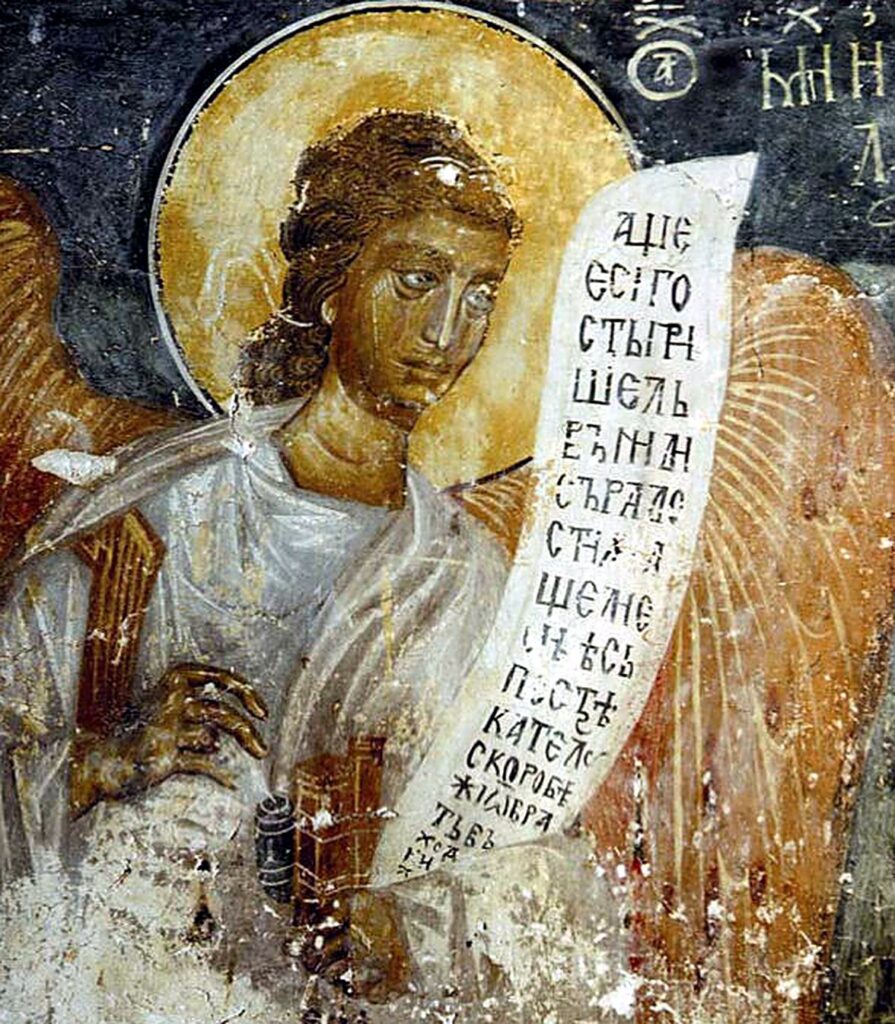
This international WEAVE project investigates the transmission and adaptation of Byzantine ideas within the medieval Slavonic world, spanning the period from the dawn of the Old Church Slavonic textual heritage to the Ottoman conquest of the Balkans. By scrutinising Greek-Slavonic textual relations, Orthodox tradition, and Byzantine florilegic habits on Slavonic soil, it maps the textual networks that shaped the Christian culture of the Orthodox Slavs.
Like the SRA Neo-Latin in the Modern World, the project treats text transmission not as a static historical record but as a dynamic process of reception. Medieval Slavonic studies are a necessary counterpart to Byzantine and Latin studies, as is research on other written cultures shaped by Byzantium: together they show how the Greek heritage was adopted in new languages and cultures. Combining manuscript philology with Digital Humanities approaches, it traces how Byzantine texts crossed linguistic boundaries and took root in new cultural spheres.
Digital Humanities Infrastructure
The Innsbruck team combines philological research with the development of sustainable digital research infrastructure. REGEST was initiated and designed by Ekaterina Dikova, who developed its conceptual framework, data structure and editorial workflows. Alongside the project, she also initiated the pilot corpus of annotated Greek-Slavonic parallel texts, which builds on Fabio Maion’s approach to automated morphological annotation and includes his editions of the Dioptra (with Jürgen Fuchsbauer) and the Manasses Chronicle.
REGEST: The Reference Tool for Medieval Greek-Slavonic Translations
REGEST is the project’s core digital infrastructure: an open-access, collaborative reference work with its own ISSN and DOI, written and edited by an international network of specialists and continually expanded. Built on Semantic MediaWiki, it offers semantic search, cross-referencing, filtered retrieval and interlinks metadata on Greek originals, Slavonic translations, their manuscript witnesses and contexts. Its structure follows the author section of Francis J. Thomson’s card index, which was transcribed in Innsbruck with Transkribus and passed on to KU Leuven for editing and online publication; REGEST entries are being linked to this edition (ThISTL).
Parallel Corpus & Annotation Tool
As a natural extension of REGEST, a pilot corpus of aligned Byzantine Greek texts and their medieval Slavonic translations is being built. It combines parallel presentation with morphological annotation, linguistic search and interactive alignment.
Joint Doctoral Research
Evelyne Diels is pursuing a joint PhD co-awarded by KU Leuven and the University of Innsbruck within the framework of the project. Her doctoral research investigates the Greek and Slavonic textual traditions of the Soterios, a 9th-century Byzantine question-and-answer work of moral instruction transmitted within medieval anthologies. During the winter semester 2026/27, she is conducting research onsite at the University of Innsbruck under the supervision of Jürgen Fuchsbauer.
FSP Guest Research Fellows (2025)
In 2025, the UIBK Research Area “Cultural Encounters – Cultural Conflicts” (FSP) hosted early-career scholars Tomáš Mikulka, Sava Kokoudev, and Kameliya Hristova-Yordanova for research stays. Coordinated and mentored by Ekaterina Dikova, the fellows integrated their research into the REGEST framework by contributing metadata and text analyses. A feature article highlighting their stay and contributions is published on the Research Area’s outreach blog.
International Conferences & Public Outreach
The project maintains close ties with the scholarly community in Innsbruck and abroad. Its results have been presented at conferences across Europe, including a plenary lecture at the 25th Dag van de Byzantinistiek (KU Leuven, 2026) and at the 25th International Congress of Byzantine Studies (Vienna, 2026). Outreach to students includes a guest lecture in the “Slawistik digital” seminar at the University of Salzburg and a presentation at the Bulgarian National Gymnasium for Ancient Languages and Cultures in Sofia. A key milestone was the international conference “Transfer of Ideas in European Spiritual History: From Medieval Texts to Interactive Online Content” (Innsbruck, 30 June – 2 July 2025), organised together with the UIBK Research Area “Cultural Encounters – Cultural Conflicts” (FSP). With contributions from Innsbruck classicists, it brought together over fifty scholars to discuss how digital tools can make medieval textual traditions interactive and accessible.
Project Advisory Board
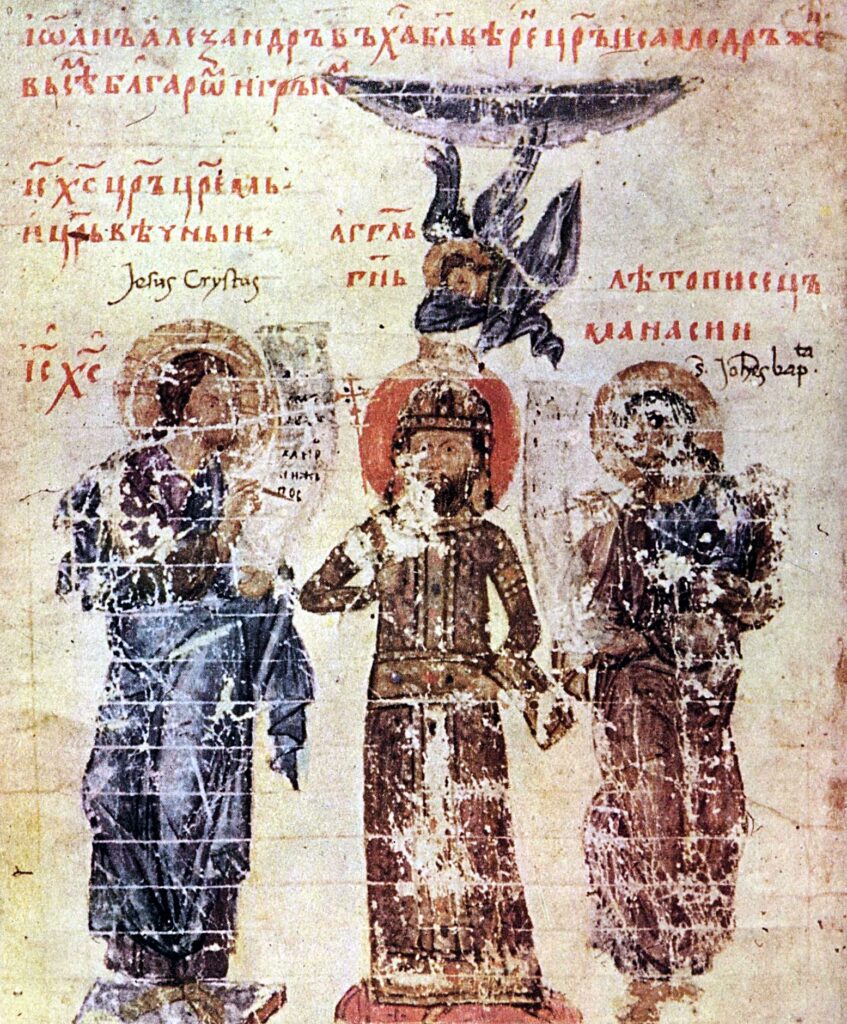
The project is supported by an international advisory board consisting of leading specialists in Byzantine and Slavonic studies: David Birnbaum (Pittsburgh), Alessandro Maria Bruni (Naples), Ralph Cleminson (Oxford), Angeliki Delikari (Thessaloniki), Roland Marti (Saarland), Anissava Miltenova (Sofia), Achim Rabus (Freiburg), Claudia Sode (Cologne), Lora Taseva (Sofia), and Staffan Wahlgren (Trondheim). Together, its members bring the expertise this research requires: Church Slavonic philology, Byzantine studies, and the digital study of medieval manuscript traditions.
Team Members