



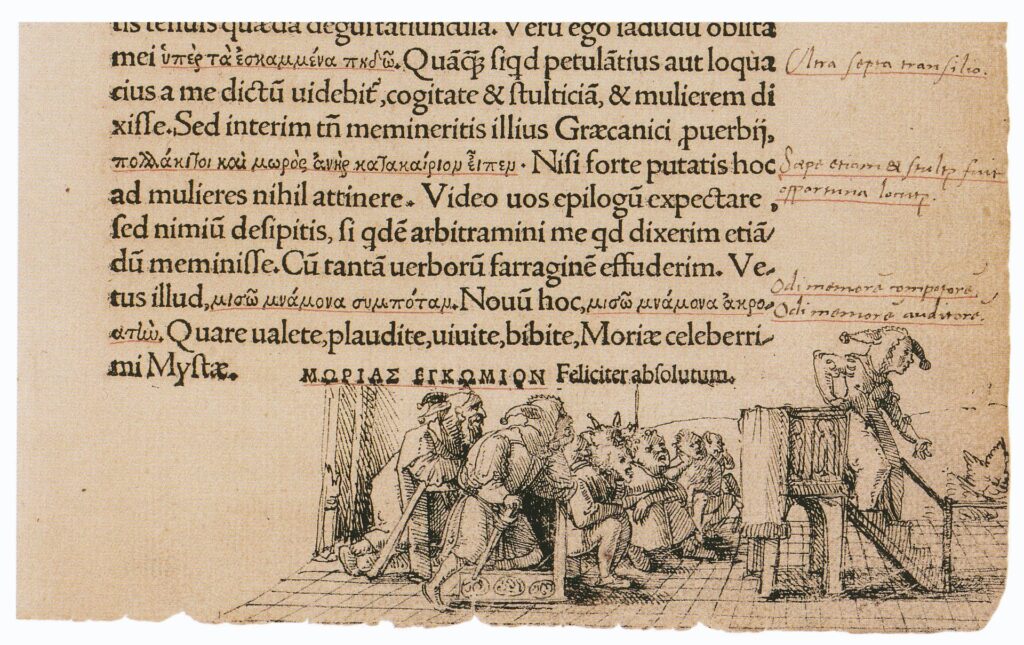
The central place of Greek in the Latin tradition is well-known to Classicists. Such was the extent of Roman interest in Hellenic culture that contact between Greek and Latin became a ‘defining feature’ of late Republican and Imperial Rome. Based on their ancient models, Renaissance humanists reconfirmed Greek alongside Latin as key to cultural perfection. While Latin remained Europe’s scholarly lingua franca, engagement with Greek now also surpassed reading and translation. The resulting production of Greek texts (‘New-Ancient Greek’) in early modernity has only recently attracted sustained attention. An overview of New-Ancient Greek is still lacking. Further, New-Ancient Greek is often seen as limited chiefly to didactics and self-fashioning. The larger role of Ancient Greek, alongside Latin, as a literary force in the early modern world remains uncharted.
In this subproject, a corpus will be complied in (1) a Wikimedia database of c. 1,000 texts representative of periods, locations, genres, and themes. It will be initially compiled based on existing catalogues and studies. The edition of selected texts (2) will use the digital edition tools of READ-COOP. The overview (3) will describe who wrote New-Ancient Greek, where, why, in which genres and in what linguistic forms. The analytical work (4) will draw new conclusions about the significance of New-Ancient Greek. Work packages (3) and (4) employ the approach of literary history. The project offers the first general description and analysis of New-Ancient Greek. Its digital tools will be the first of their kind in the field.
Publications
- Heiss, Tobias: Hospitality and a Translation into Greek, Hermes. Platform for early modern Hellenism (Blog), 04.11.2026. (DOI)
- Heiss, Tobias (rec.): Stefan Weise (ed.), Griechischhumanismus des 16. Jahrhunderts. Lorenz Rhodoman im Kontext und digital (Palingenesia 142), in: Anzeiger für die Altertumswissenschaft 79/1 (2026), 44–50. (DOI)
- Barton, William M and , Anton A. Kelderer (2026) “Subjekt, System, Zuschreibung: Zur Herausforderung des Werkbegriffs durch generative KI”. Juridikum. Zeitschrift für Kritik| Recht | Gesellschaft 2026 (2): 188–197 (DOI).
Talks
- Barton, William M. and Georgios Leivadiotakis: Apo ta frangochiotika sta frangokrititika: η λατινοελληνική γραφή στα κείμενα της κρητικής αναγέννησης, Γλώσσα, Λογοτεχνία και Εκπαίδευση: 1ο Διεθνές Συνέδριο, University of Crete, Rethymno, Greece, 13–15 November 2026.
- Heiss, Tobias: “Οὐδεὶς ἀνελλήνιστος εἰσίτω, i.e. nemo, linguae ignarus Graecae, introito”: Audience and Performance in Greek Orations from the University of Altdorf (1623–1713), NEW ANCIENT GREEK LITERATURE: CONTEXTS, AUDIENCES, LEGACIES, Leuven, 9 July 2026.
- Barton, William M.: “From the Metropolitan’s Son…”: Two Letters to Jakob Zwinger from Emmanuel Achilles of Thessaloniki (1599), NEW ANCIENT GREEK LITERATURE: CONTEXTS, AUDIENCES, LEGACIES, Leuven, 8 July 2026.
- Heiss, Tobias: Andreas Schauberts Μυρμηκολογία (1705): Eine neualtgriechische Valediktionsrede im Kontext der europäischen Physikotheologie, AKMe, Salzburg, 27 June 2026.
- Barton, William M.: Byzantine Letters in Golden-Age Spain: On Vicente Mariner’s translation of Theophylact Achridensis’ Correspondence, Text and Transmission Research Seminar, Leuven, Belgium/Vienna, Austria, 11 June 2026 (online).
- Heiss, Tobias: Griechische Schülergespräche: Praxis und Nutzen, 12. Österreichische Tagung zur Didaktik der alten Sprachen: Forschung und Praxis im Dialog, Innsbruck, 28 February 2026.
- Barton, William M.: KI-gestützte Lehre in Latein und Griechisch: Erfahrungen aus der Hochschuldidaktik, 12. Österreichische Tagung zur Didaktik der alten Sprachen Forschung und Praxis im Dialog, Innsbruck, Austria, 27–28 February 2026.
- Heiss, Tobias: Interconfessional Exchange in Ancient Greek, 45th Metageitnia, Innsbruck, 17 January 2026.
Team Members


Sub Project 2’s Contributions and Activities
-
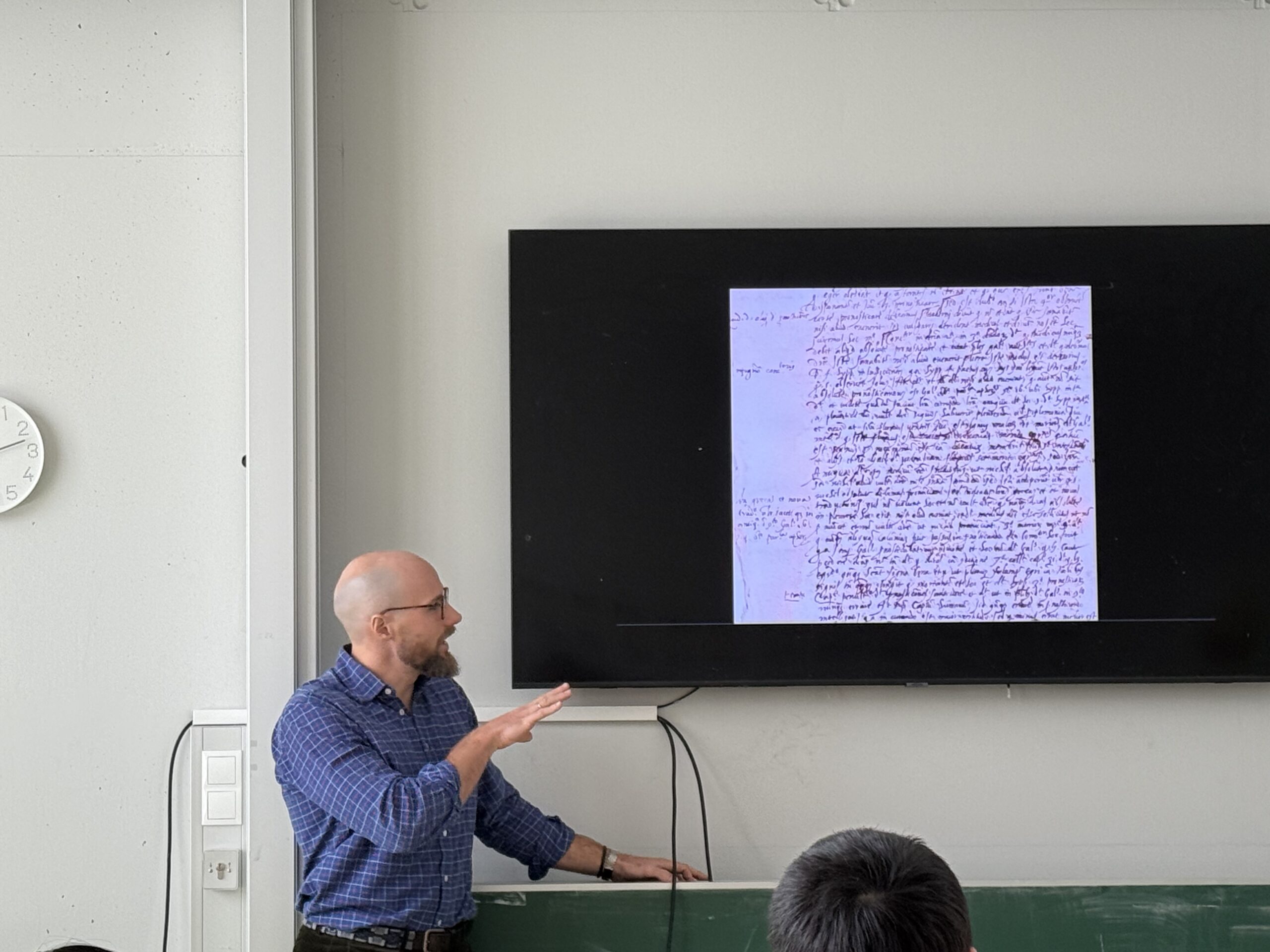
William Barton, one of our principal investigators, sparks enthusiasm for ancient languages in pupils. (12/2026)