





Researcher in Sub-Project 1
Contact
University of Innsbruck
Department for Classical Philology and Neo-Latin Studies
room 06E030 (6th floor)
Innrain 52a (Ágnes-Heller-Haus)
A-6020 Innsbruck, Austria
email: antonia.foggia@uibk.ac.at
Biography
- 08/1998 Born in Pozzuoli, Italy
- 07/2017 High school diploma (Maturità classica) at Liceo Classico – Istituto Superiore Statale Pitagora, Pozzuoli, Italy
- 07/2022 BA in Classics at the University of Naples Federico II (summa cum laude)
- 10/2025 MA in Philology, Literature and Civilization of the Ancient World at the University of Naples Federico II (summa cum laude); thesis on the anonymous commentary on Ovid’s Ars amandi and Virgil’s Eclogues preserved in the MS V.D.52 (National Library “Vittorio Emanuele III”, Naples)
- 01/2026 – present: Predoc Project Collaborator at the University of Innsbruck within the SFB Neo-Latin in the Modern World
- 03/2026: PhD student in Literature and Cultural Studies at the University of Innsbruck, Supervisor: Prof. Dr. Florian Schaffenrath
Research Interests
- Classical reception studies
- Book history and reading practices
- Italian humanism
- Virgilian commentaries
- Ciceronianism
- Digital Humanities
Talks
- “The Library of the Humanist Aulus Ianus Parrhasius and the Anonymous Commentary on Virgil’s Eclogues of the MS Naples, National Library, V.D.52”, International Workshop “Naples and Campania as a Melting Pot of Cultures”, Naples, 28.09.2022.
- “Recollectae inedite sull’Ars amandi di Ovidio e sulle Bucoliche di Virgilio in un manoscritto appartenuto a Parrasio”, Cycle of Seminars “Parrhasiana Online”, 03.04.2025 (online: https://www.youtube.com/watch?v=8Ogu8S8yRo4)
Antonia Foggia’s Contributions and Activities
-
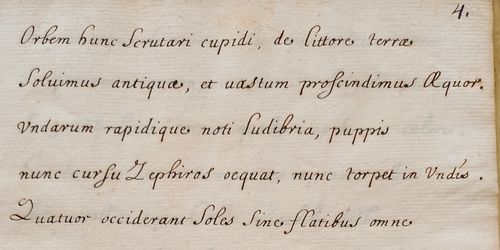
Our researcher Antonia Foggia (sub-project 1) partecipated in the Society for Neo-Latin Studies Postgraduate and ECR Scholars Event (online, 20th March 2026), a scholarly forum dedicated to the presentation and discussion of ongoing research in Neo-Latin studies by postgraduate and early career researchers, and to the promotion of academic exchange and critical feedback. In her…
