
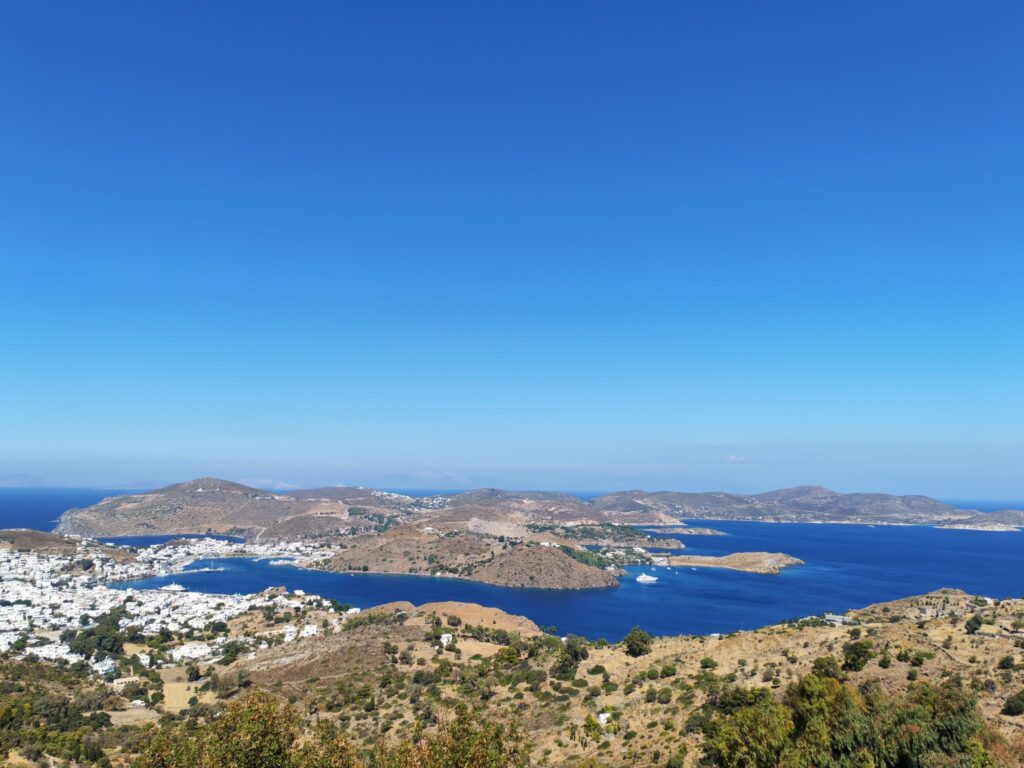
From the 14th to the 18th of September the Erasmus+ Blended Intensive Programme (BIP) Codex and Code, organized by the Democritus University of Thrace (Greece) and carried out jointly with the Historical and Palaeographical Archive of the National Bank of Greece, took place on the Greek island of Patmos. The programme aims to provide insights into the study of Greek manuscripts and their ongoing dialogue with digital technologies. The sessions establish a shared foundation in papyrology, codicology, Greek palaeography and their digital counterparts. Within an international learning environment, participants experienced keynotes, workshops, lectures and manuscript-based training at the Library of the Holy Monastery of Saint John the Theologian. The programme itself was open to Classics students at both undergraduate and PhD level, as well as to early-career researchers.
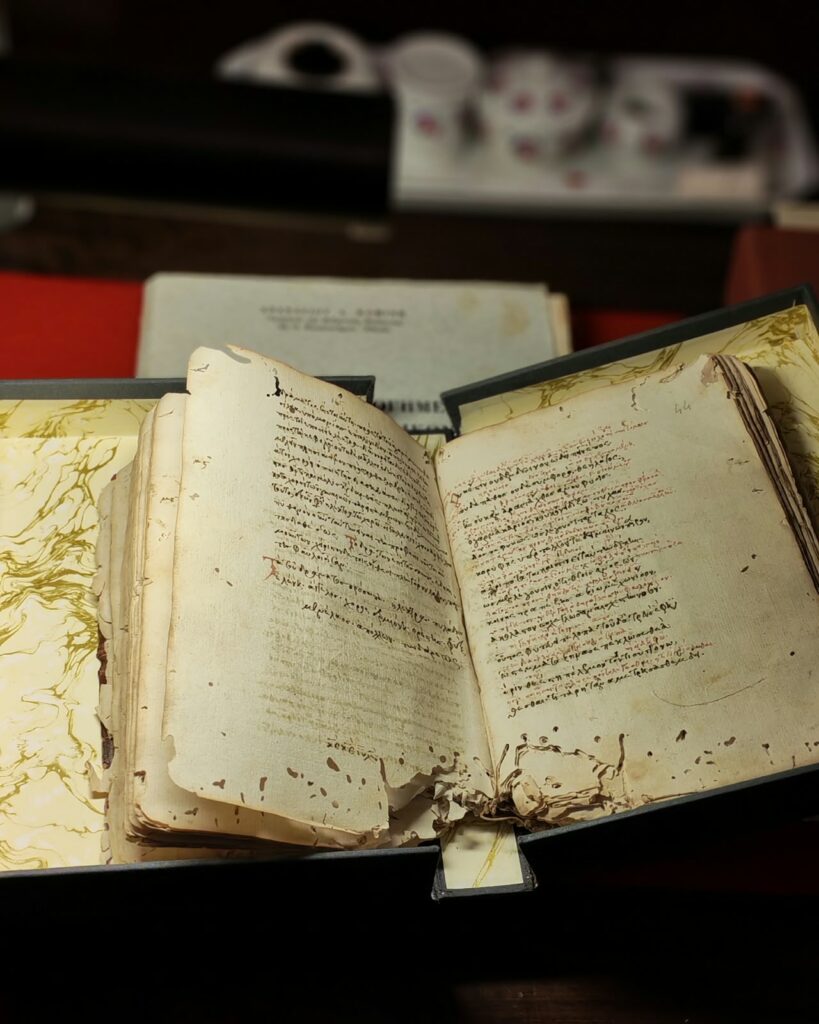
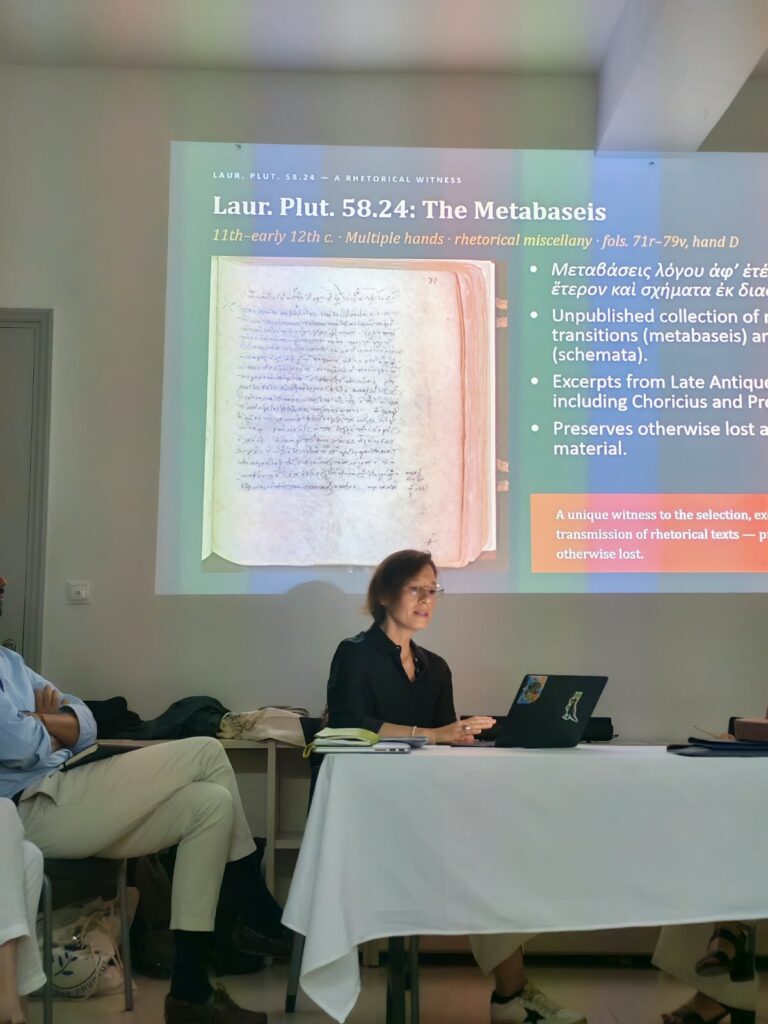
Chiara Telesca, a postdoctoral researcher in the LAGOOS project at our institute, gave a lecture entitled Perspectives of the Approach to Italo-Greek Manuscripts between the 10th and 12th centuries, together with Prof. Raffaela Cantore, Francesco Lovino (both Università degli Studi di Ferrara) and Carmelo Benvenuto (Università degli Studi di Basilicata). In particular, Telesca elaborated further on an eleventh-century manuscript from the Biblioteca Medicea Laurenziana in Florence. This important and multifaceted Byzantine compilation manuscript preserves a collection of rhetorical excerpts and transitions.
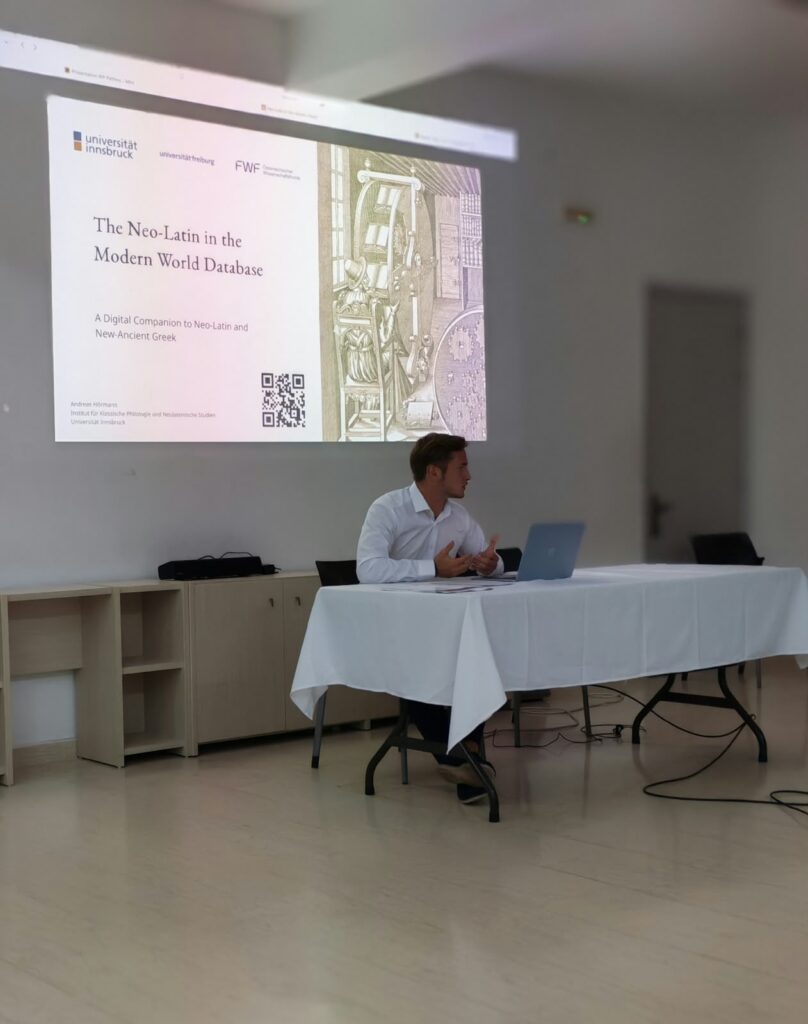
Andreas Hörmann, a Master’s student and member of the SRA (Subproject 1), presented the Neo-Latin in the Modern World database, on which he is currently working with his colleagues and supervisors. The lecture was closely connected to his own research interests in the translations of early Greek poetry in Latin literature. During a guided tour of the database, participants in the BIP were introduced to several of its features and explored how it can be operated and used as a valuable research tool. The discussion following the lecture also proved highly fruitful, generating positive feedback on the database and valuable suggestions from the participating students and early-career researchers.
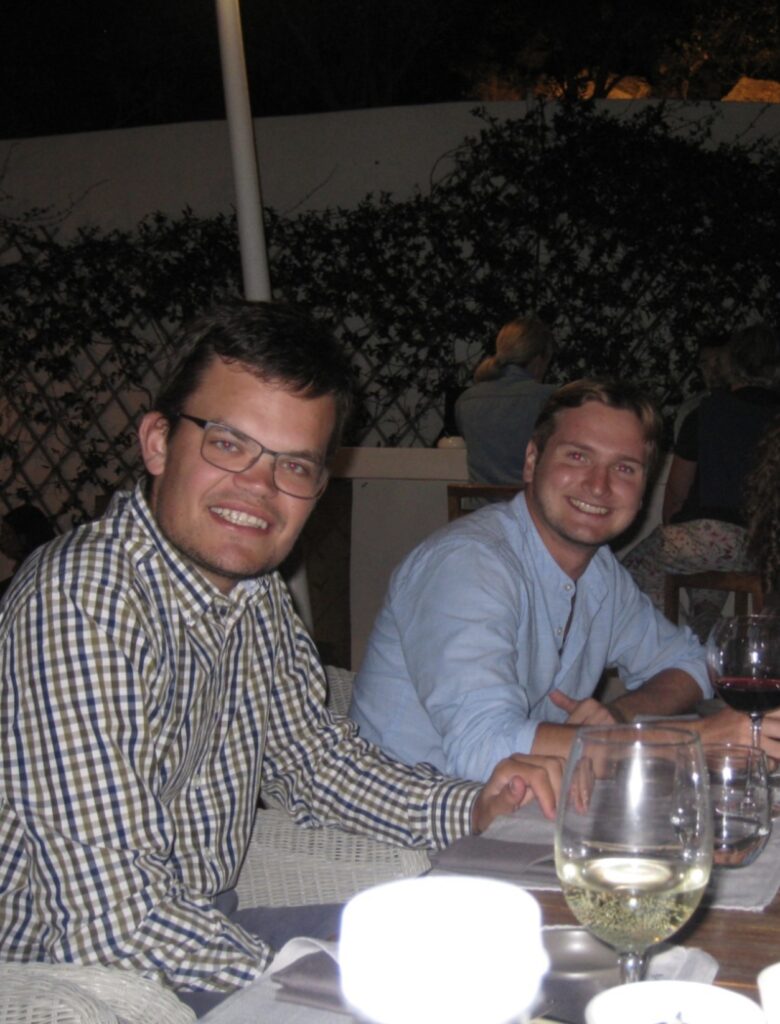
In addition to giving their lectures, Telesca and Hörmann – who were accompanied by another Master’s student, Fabian Webhofer – had the opportunity to familiarize themselves with some of the manuscripts held at the Library of the Holy Monastery of Saint John the Theologian, where they immediately began further investigating the treasures of cultural heritage on the island of Patmos.