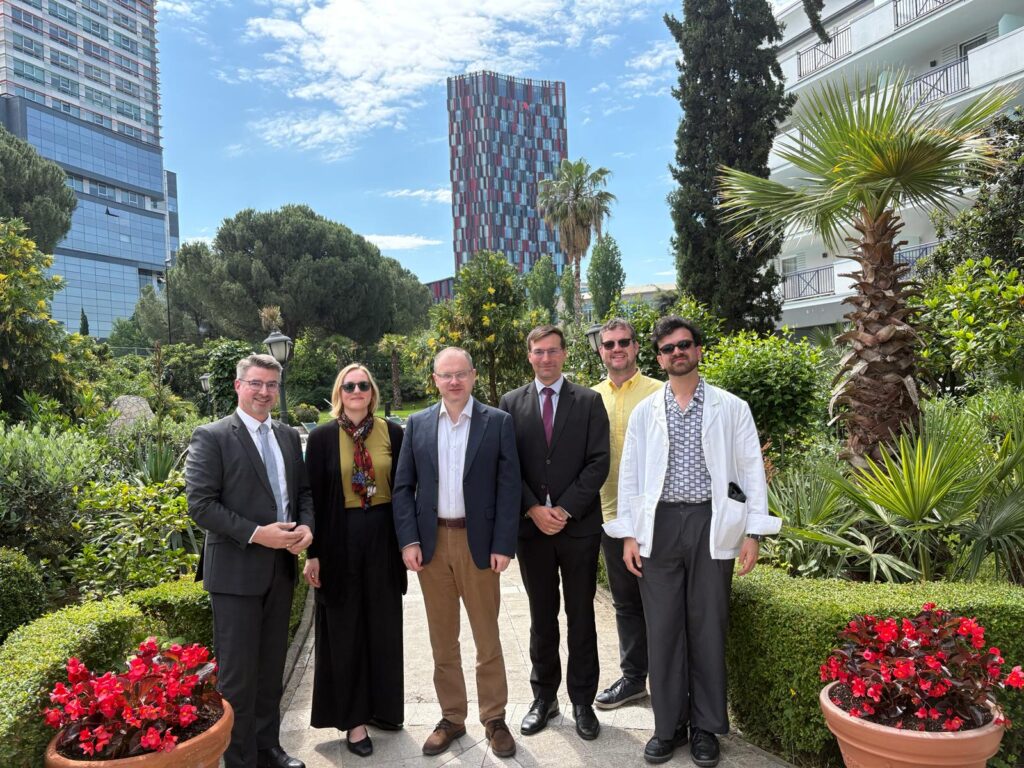


On 21 and 22 May 2026, our related project Scanderbegus Latinus (PI Stefan Zathammer), in collaboration with Prof. Gentiana Kera (Department of History, University of Tirana), hosted a two-day international workshop dedicated to the representation of Skanderbeg in Early Modern literature at the University of Tirana.
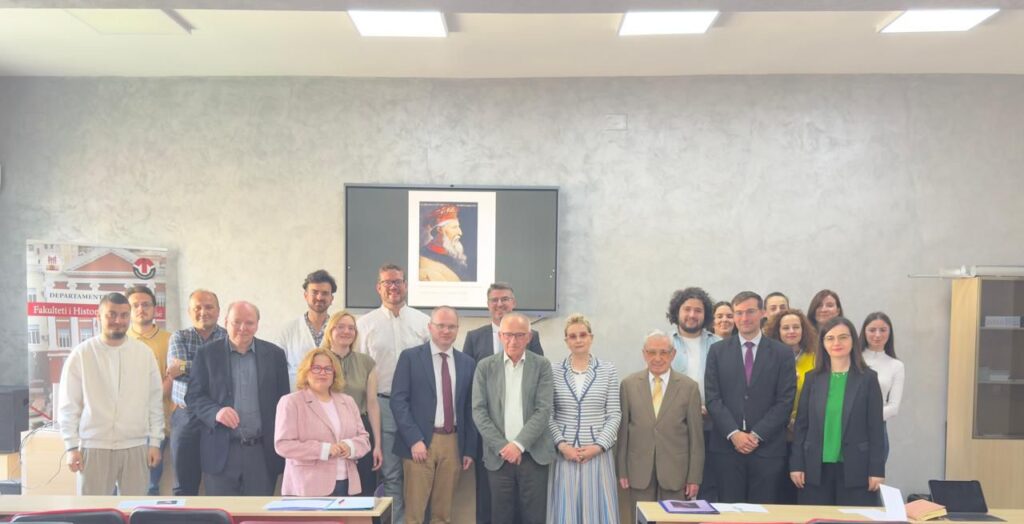
The workshop was formally opened by Prof. Mark Marku, Dean of the Faculty of History and Philology, and Prof. Valentina Duka, Head of the Department of History. A special honour was the participation of Martin Schaller PhD, Deputy Head of Mission at the Austrian Embassy in Tirana, who attended the opening session.
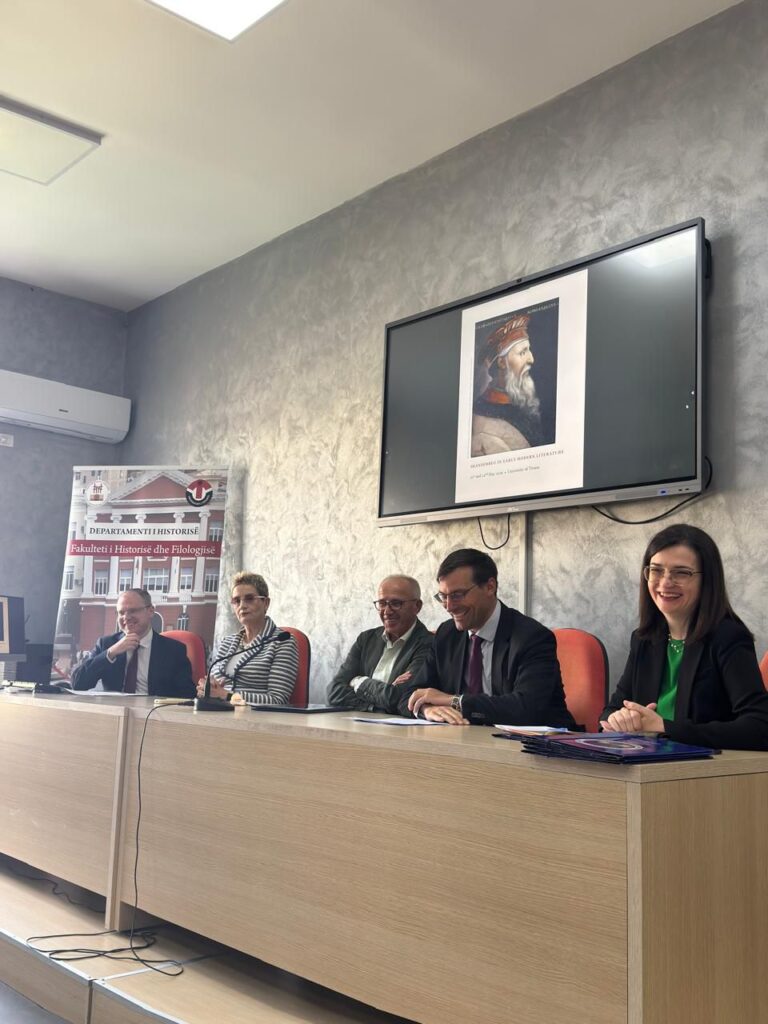
The first day focused on Skanderbeg’s image in Neo-Latin literature. Martin Bauer-Zetzmann (University of Innsbruck) examined the largely overlooked poem Scander by the Italian humanist Girolamo Bologni. Irina Tatuschnig (York) offered a detailed interpretation of Skanderbeg in the lyric poetry of the German Jesuit Jacob Balde. Stefan Zathammer (Innsbruck) analysed the barbarian topos in the most influential biography of Skanderbeg in the early modern period, Marinus Barletius’ Historia de vita et gestis Scanderbegi. Florian Schaffenrath (Innsbruck) discussed the epic genre through Jean de Bussière’s Scanderbegus, while Michael Schmidt-Neke (Kiel) presented Skanderbeg-themed school dramas from the German-speaking regions.
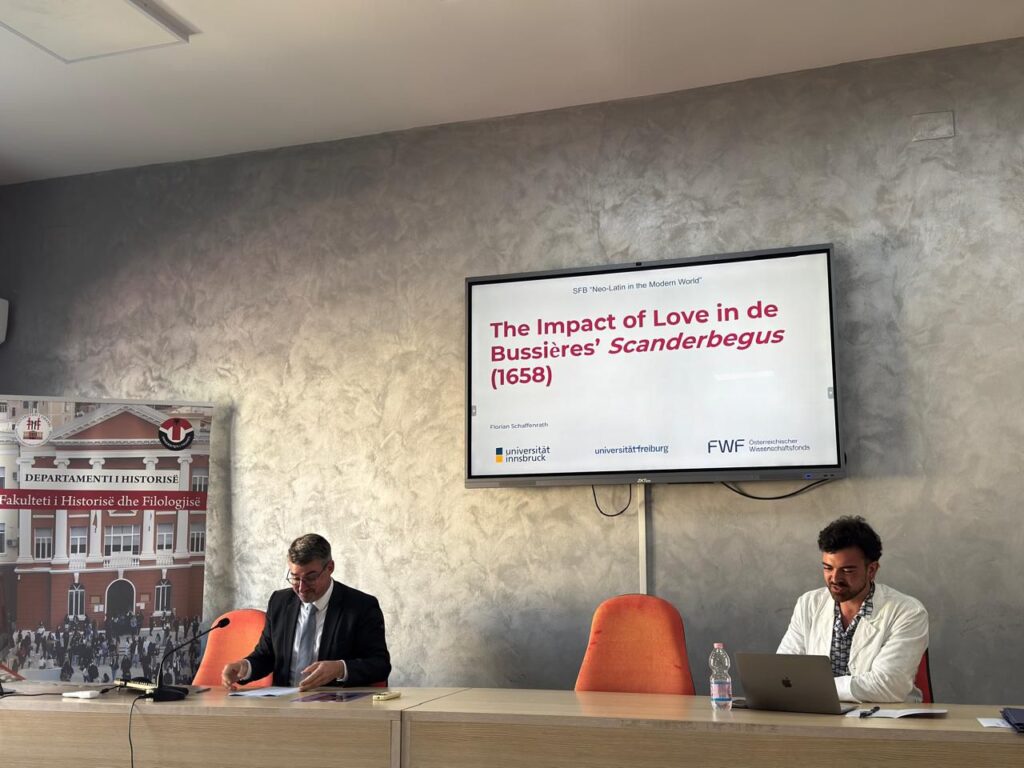
On the second day, the scope broadened beyond Latin literature. Edmond Malaj (Tirana) explored Skanderbeg as a central figure in anti-Ottoman propaganda literature in the German-speaking world. Riccardo Stigliano (Innsbruck) examined the portrayal of Skanderbeg in Byzantine chronicles, particularly in the works of Laonikos Chalkokondyles and Michael Critobulus. Finally, two contributions addressed modern Albanian memory: Gentiana Kera (Tirana) analysed Skanderbeg’s representation in history textbooks during the socialist period, and Enriketa Papa-Pandelejmoni (Tirana) discussed his depiction in contemporary Albanian school textbooks.
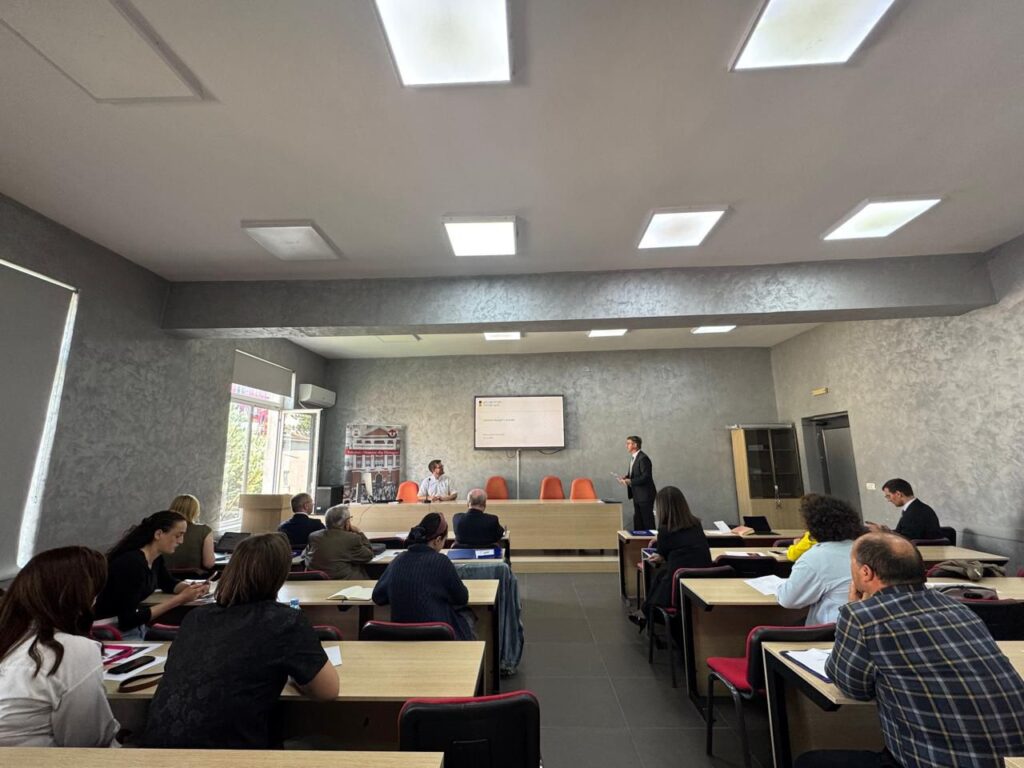
The workshop successfully combined philological, literary, and historical approaches, fostering fruitful interdisciplinary dialogue on one of Albania’s most emblematic national figures.