

In the Early Modern period, Latin was not only the language of culture but also an active and prestigious medium of intellectual exchange. It stood at the crossroads of Europe’s linguistic landscape, interacting continuously with vernacular and other ancient languages, in particular Greek. Through Latin, texts could travel beyond regional and national boundaries, entering new cultural and educational contexts. Translation into Latin thus became one of the most powerful vehicles for the transnational circulation of knowledge. The spread of printing from the fifteenth century onward further intensified this process, multiplying copies, audiences, and points of contact across the continent.
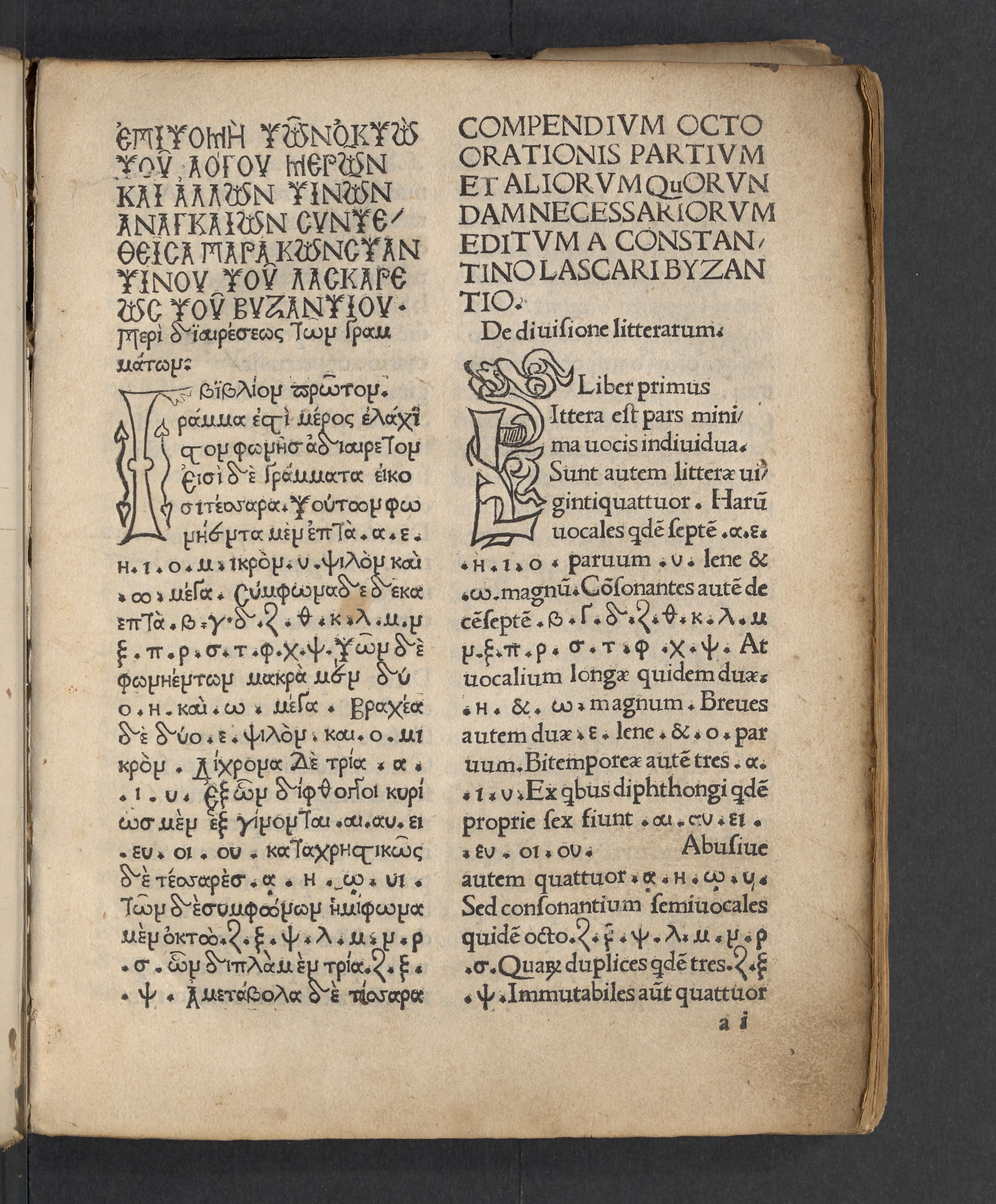
Within this vibrant print culture, bilingual and multilingual editions represent a particularly revealing phenomenon. These books placed two or more languages in direct relation on the page, presenting an original text alongside its Latin translation, or pairing a Latin work with a vernacular rendering. The coexistence of languages was not a neutral choice: it required specific editorial strategies, typographical solutions, and clearly defined assumptions about readership. Parallel columns, facing-page layouts, and interlinear translations were material responses to the needs of a polyglot society. Multilingual books shaped the reader’s experience, guided interpretation of the texts, and made visible the intended function of the volume, whether pedagogical, scholarly, political, or devotional.
This project aims to create and investigate the first digital corpus dedicated to bilingual and multilingual editions printed in the Renaissance period that include Latin translations and their corresponding source texts. The goal is to understand not only how translations were produced, but also how they were embedded in the material, intellectual, and economic realities of the early modern book world.
The analysis approaches these editions as complex cultural artifacts. It considers their paratexts – prefaces, dedications, commentaries, and epilogues – as key sites in which translators and editors articulated their intentions, justified their choices, and addressed specific audiences. It examines the roles of printers and publishers, whose technical expertise and commercial strategies influenced the physical form, layout, and circulation of multilingual books. It also investigates patterns of readership, exploring how these volumes functioned in schools, universities, confessional settings, and private libraries, and how they mediated between different linguistic communities.
Equally central is the study of materiality. The layout of the page, the use of typefaces for different languages, the organization of marginalia and commentary, and the integration of translation with the original text all reflect broader developments in typographical technique and book design. In this sense, multilingual editions offer a privileged vantage point from which to observe the interaction between linguistic practice and material innovation within the broader history of print culture.
By situating Neo-Latin translations within their historical, intellectual, and commercial contexts, the project seeks to show how these works participated in the construction of a shared European culture. Multilingual printed books will be studied as instruments of mediation, negotiation, and cultural transfer. Studied collectively through a digital corpus, they will reveal the extent to which translation, print technology, and readership converged to shape the intellectual landscape of early modern Europe and to redefine the relationship between language, knowledge, and readership.
Publications
- Rossetti, Federica: Porcelio alla corte dei Malatesta: la disputa sulla conoscenza del greco, tra satira e invettiva, in Rinascimento meridionale : rivista annuale dell’Istituto Nazionale di Studi sul Rinascimento Meridionale : X (2025), 49-69 (DOI).
- Rossetti, Federica: The Argonautic Myth in Italian Humanism: Basinio da Parma’s Argonautica, in: Argo Crossing: Studies in Apollonius Rhodius’ ›Argonautica‹ and Its Reception, edited by Alastair Daly, Lisa Doyle and Jeremy Lam (Berlin-Boston, 2026), 417-440 (DOI).
Talks
- Purcaro, O. Lorena: Bilingual Editions and the Early Modern Transformation of Classical Texts. Old Ideas in New Minds: Strategies of Autonomy from Antiquity to the Renaissance, University of Jena, 14 September 2026.
- Purcaro, O. Lorena and Rossetti, Federica: Multilingual Editions for Early Modern Readers: Continuity and Change in Renaissance Print Culture, Aurora Summer School NeoLEMoS, Innsbruck, 26 July – 1 August 2026.
- Luggin, Johanna and Rossetti, Federica: Participation in the Round Table Women’s Networking in Neo-Latin Studies, Aurora Summer School NeoLEMoS, Innsbruck, 26 July – 1 August 2026.
- Abbamonte, Giancarlo and Rossetti, Federica: What can we learn from the libraries of two humanists of the Early Sixteenth Century? The cases of Aulus Ianus Parrhasius and Beatus Rhenanus, Aurora Summer School NeoLEMoS, Innsbruck, 26 July – 1 August 2026.
- Rossetti, Federica and Ryczkowski, Patryk: Participation in the Round Table Career Opportunities for Early-Career Researchers: Project writing, funding opportunities, and discussion, Aurora Summer School NeoLEMoS, Innsbruck, 26 July – 1 August 2026.
- Purcaro, O. Lorena: Learning languages, teaching morals: Aesop’s Fables in Early Modern bilingual editions, Print Culture and Translation in Central Europe (1500–1700): Methods, Problems and Approaches, Tallinn, 01 July 2026.
- Rossetti, Federica: Les paratextes multilingues dans le cercle érasmien. Pratiques et enjeux du plurilinguisme humaniste à Bâle, Paratextes polygraphes et plurilingues de l’Antiquité à l’époque moderne, Paris, 01 July 2026.
- Graziano, Domenico and Purcaro, O. Lorena: Introdurre Euclide nel Rinascimento. Mediazione paratestuale tra scienza greca e cultura moderna in latino, Transfer of Knowledge in Auxiliary Texts to Greek and Latin Literature (14th–16th c.), Catania, 05 June 2026.
- Rossetti, Federica & Stigliano, Riccardo: Reception of the Orphic Argonautica in Italian Humanism, Roma Tre University, 22 April 2026.
- Purcaro, O. Lorena: Naming the New Book: Terminology, Materiality, and Legitimation in the Ancient Book World, CRASIS Masterclass and Annual Meeting 2026, Groningen, 05 March 2026.
- Purcaro, O. Lorena: Reception of Claudian’s De raptu Proserpinae from Middle Ages to Renaissance Humanism: The Case of Aulo Giano Parrasio’s Commentary (1501–1505), 45th Metageitnia, Innsbruck, 17 January 2026.
Conferences and Workshops
- Aurora Summer School, NeoLEMoS – Neo-Latin for Early Modern Studies, organised by Federica Rossetti and Patryk Ryczkowski, Innsbruck, 26 July – 1 August 2026.
Team Members


Sub Project 5’s Contributions and Activities
-
On September 22, we had the pleasure of hosting Dr. Saskia Limbach at our department. Her visit began with a dynamic round-table with department and project members, offering a fantastic opportunity to share our ongoing research and exchange project ideas. Later, Dr. Limbach presented key insights from her ERC-funded project, WidowsPrint. Her talk, with the…
-
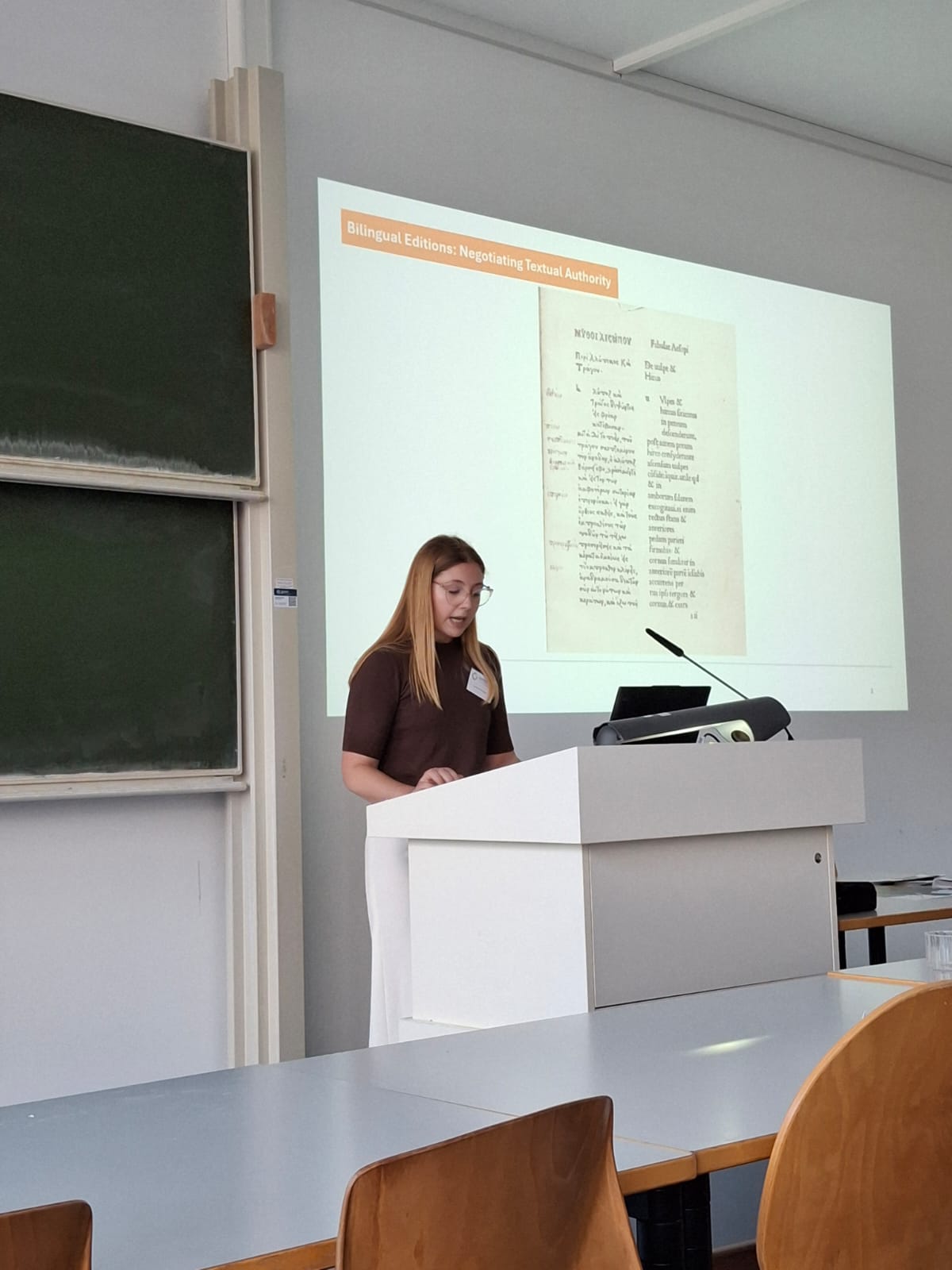
Orsola Lorena Purcaro (SP5 – Neo-Latin Translations – Bilingual Editions for Early Modern Readers) participated in the international conference Old Ideas in New Minds: Strategies of Autonomy from Antiquity to the Renaissance, organized by the Research Group “Autonomy of Heteronomous Texts in Antiquity and the Middle Ages” at the University of Jena, which took place…
-
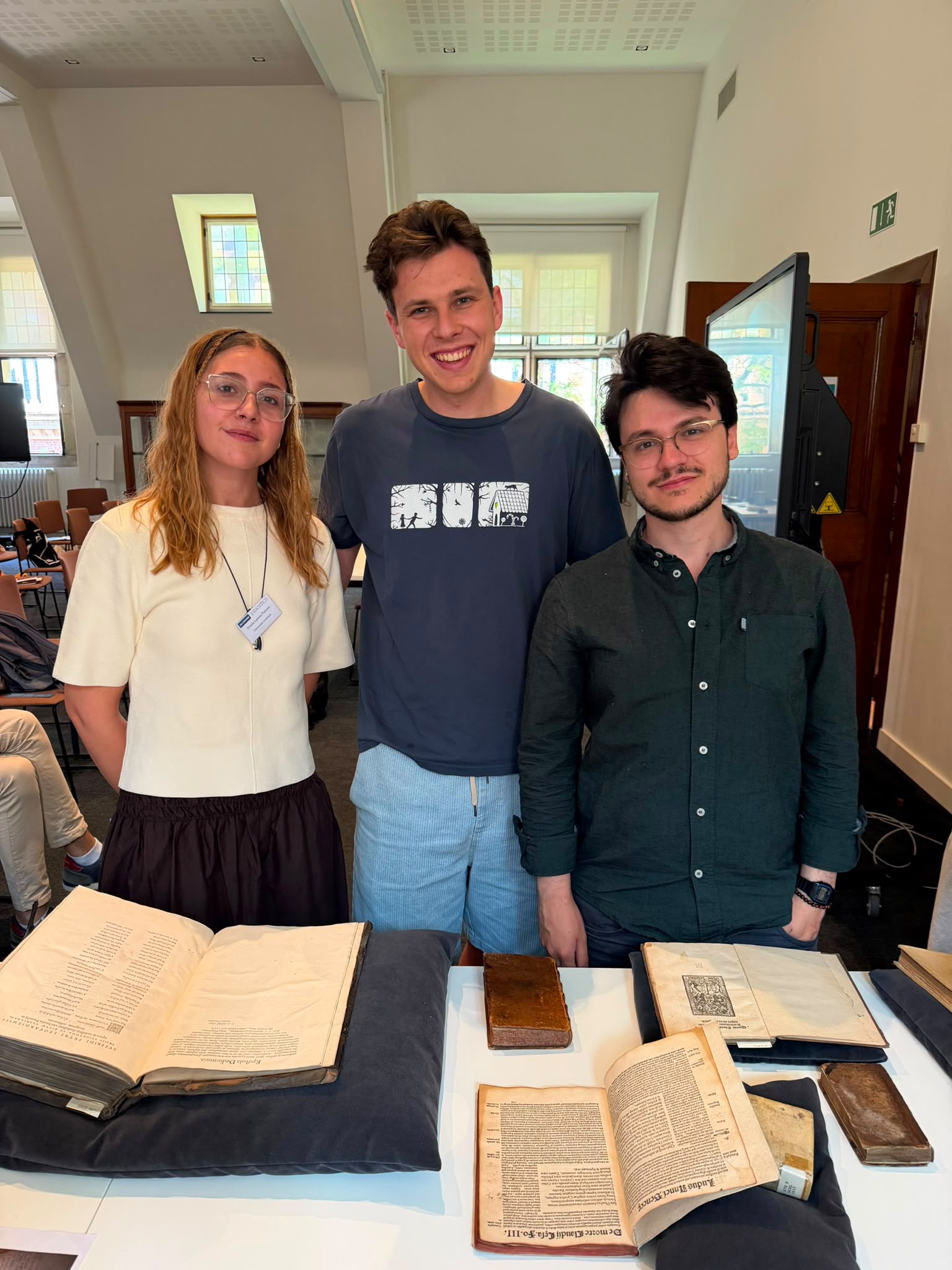
From July 13 to 17, our team members Domenico Graziano, Tobias Heiss, and O. Lorena Purcaro participated in the ERASMOS Summer School on Classical Bilingualism at KU Leuven. The five‑day program explored code-switching, translation, and other manifestations of Latin–Greek bilingualism with leading international scholars. Next to a guided city tour with the organizer Raf Van…
-
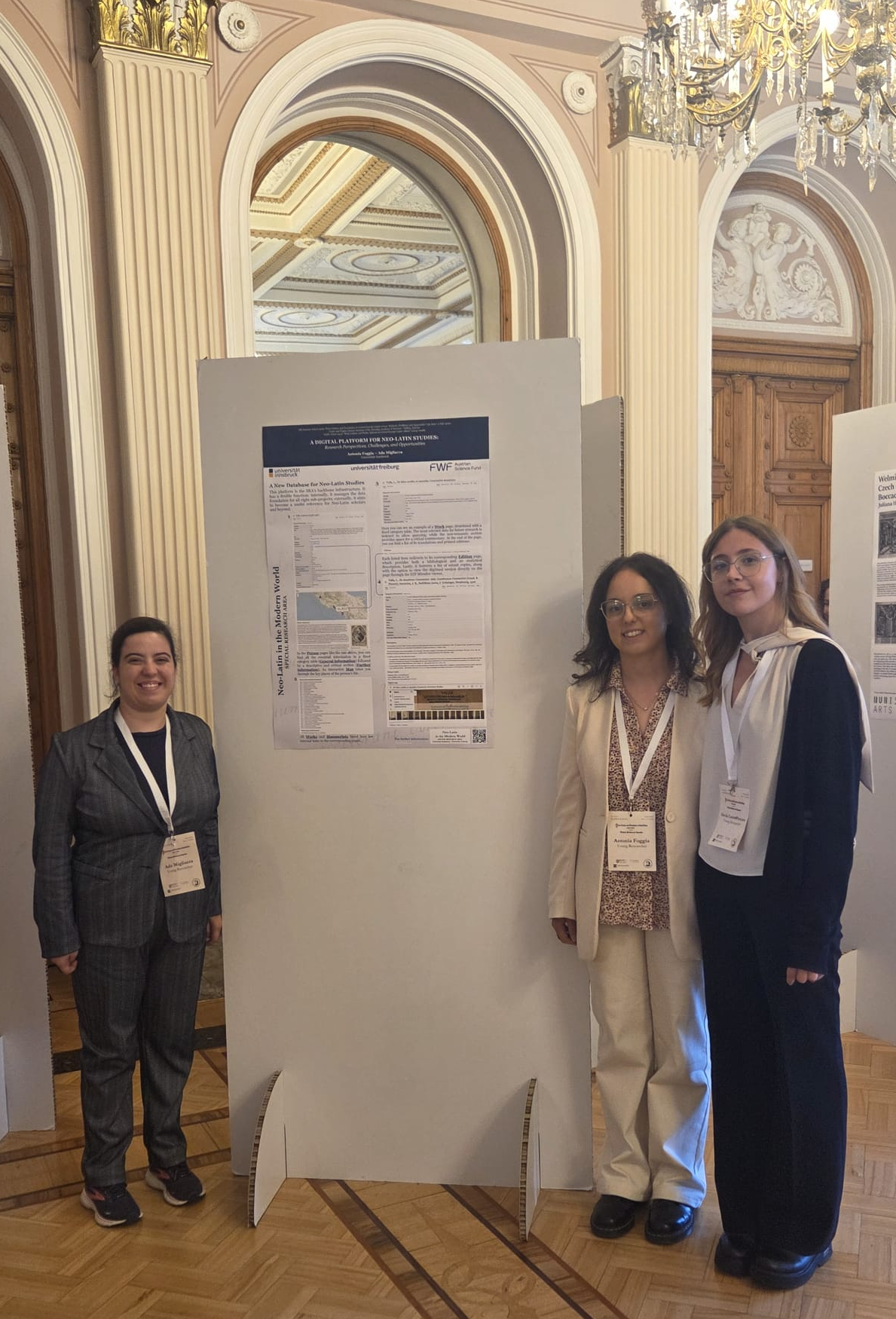
Our researchers Antonia Foggia, Ada Migliazza, and O. Lorena Purcaro actively took part in the YRI Summer School “Print Culture and Translation in Central Europe (1500–1700): Methods, Problems and Approaches”, (Tallinn, 30 June–3 July 2026), organised by the COST Action CA23137 – PCPSCE and hosted by the Under and Tuglas Literary Institute of the Estonian Academy…
-

On July 1st, 2026, Federica Rossetti delivered a presentation at the conference “Paratextes polygraphes et plurilingues de l’Antiquité à l’époque moderne”, hosted by the Collège de France in Paris. Her paper, entitled “Les paratextes multilingues dans le cercle érasmien. Pratiques et enjeux du plurilinguisme humaniste à Bâle”, explored the phenomena of Renaissance multilingualism and polygraphy.…
-
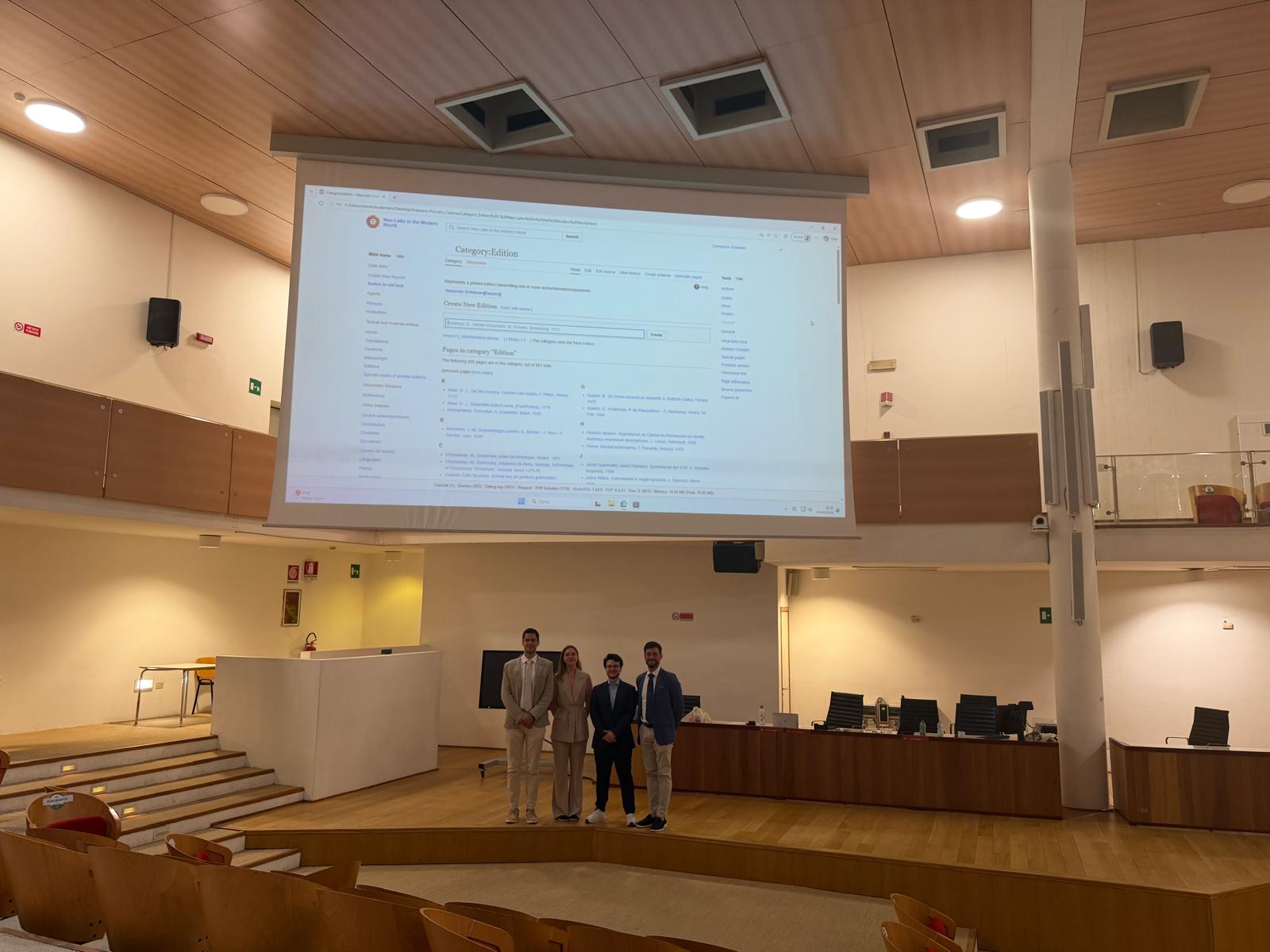
Domenico Graziano (SP1 – Coordination Project) and Orsola Lorena Purcaro (SP5 – Neo-Latin Translations – Bilingual Books for Early Modern Readers) participated in the international conference Transfer of Knowledge in Auxiliary Texts to Greek and Latin Literature (14th–16th c.): The Making of the Late Medieval and Renaissance Canon, organized by Giandamiano Bovi and Vincenzo Damiani (Catania, 4–5 June…