



Category: News
-
The SRA team recently met with Adam Jatowt and Joseph Wang-Kathrein from the Forschungszentrum Digital Humanities for a productive exchange on current digital workflows and infrastructure. During the meeting, the SRA’s digital committee introduced the Neo-Latin in the Modern World Semantic MediaWiki, discussing its underlying technical architecture and the implementation of new tools to query,…
-
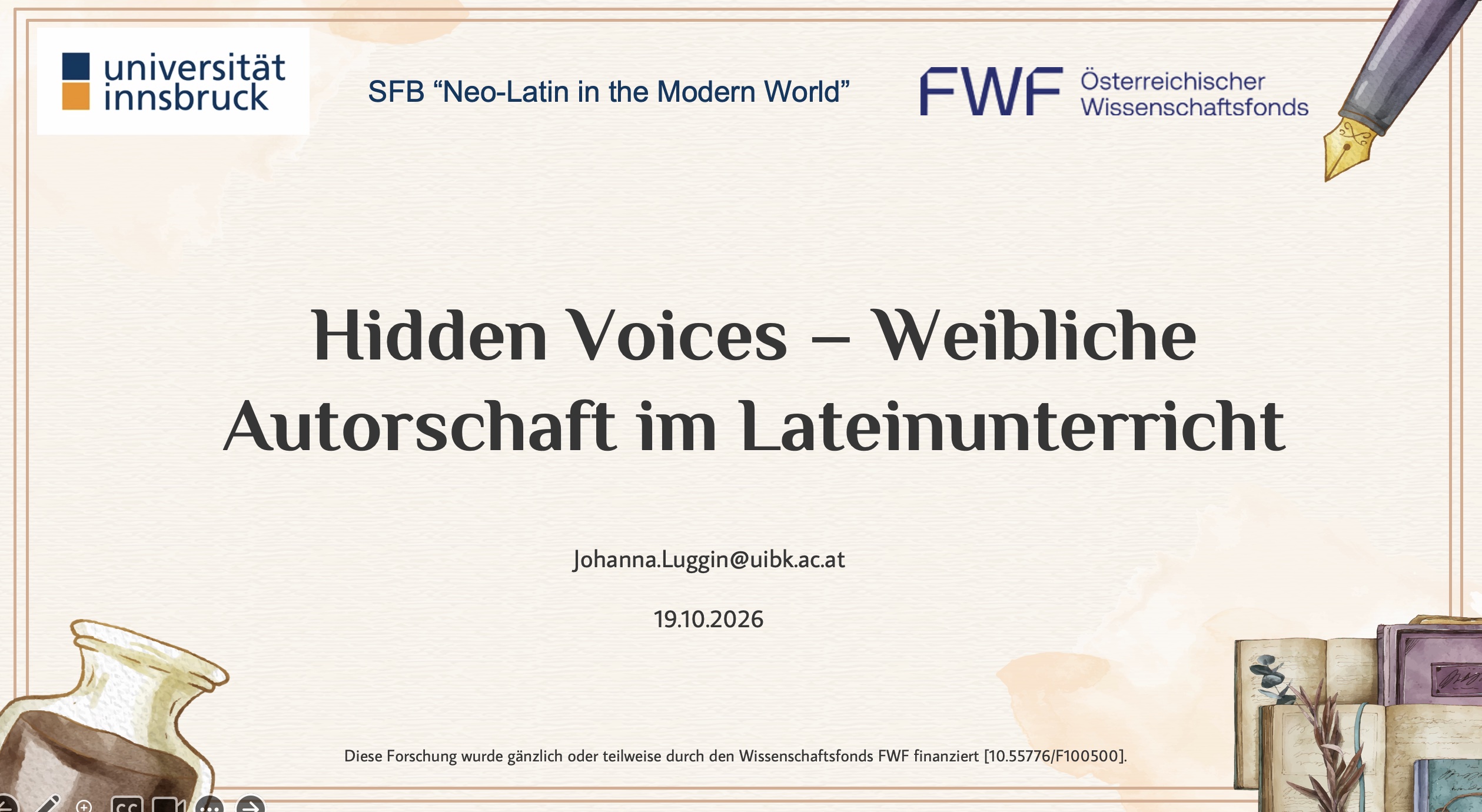
On Monday, 19 October, Johanna Luggin gave an invited online talk to a group of South Tyrolean Latin teachers, speaking about Latin women writers in the classroom, research in SP4 on „Women’s Voices in Neo-Latin“, the SRA’s digital platform and more. Ideas for inclusion of ancient, medieval and Neo-Latin women writers and their texts in…
-
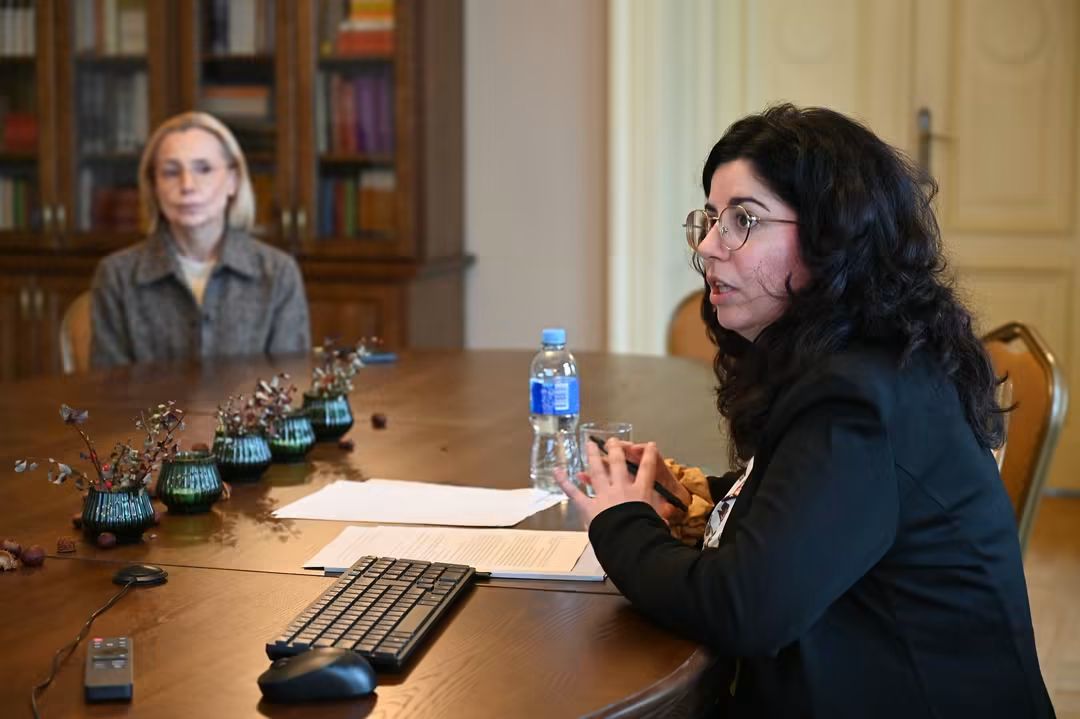
On October 19, 2026, Federica Rossetti delivered a seminar at the Institute of Lithuanian Literature and Folklore in Vilnius, entitled “Polish and Lithuanian Aristocracy in Basel in the Second Half of the Sixteenth Century: The Network of Celio Secondo Curione.” The seminar explored the well-documented formation of European networks connecting Eastern European elites with Reformed…
-
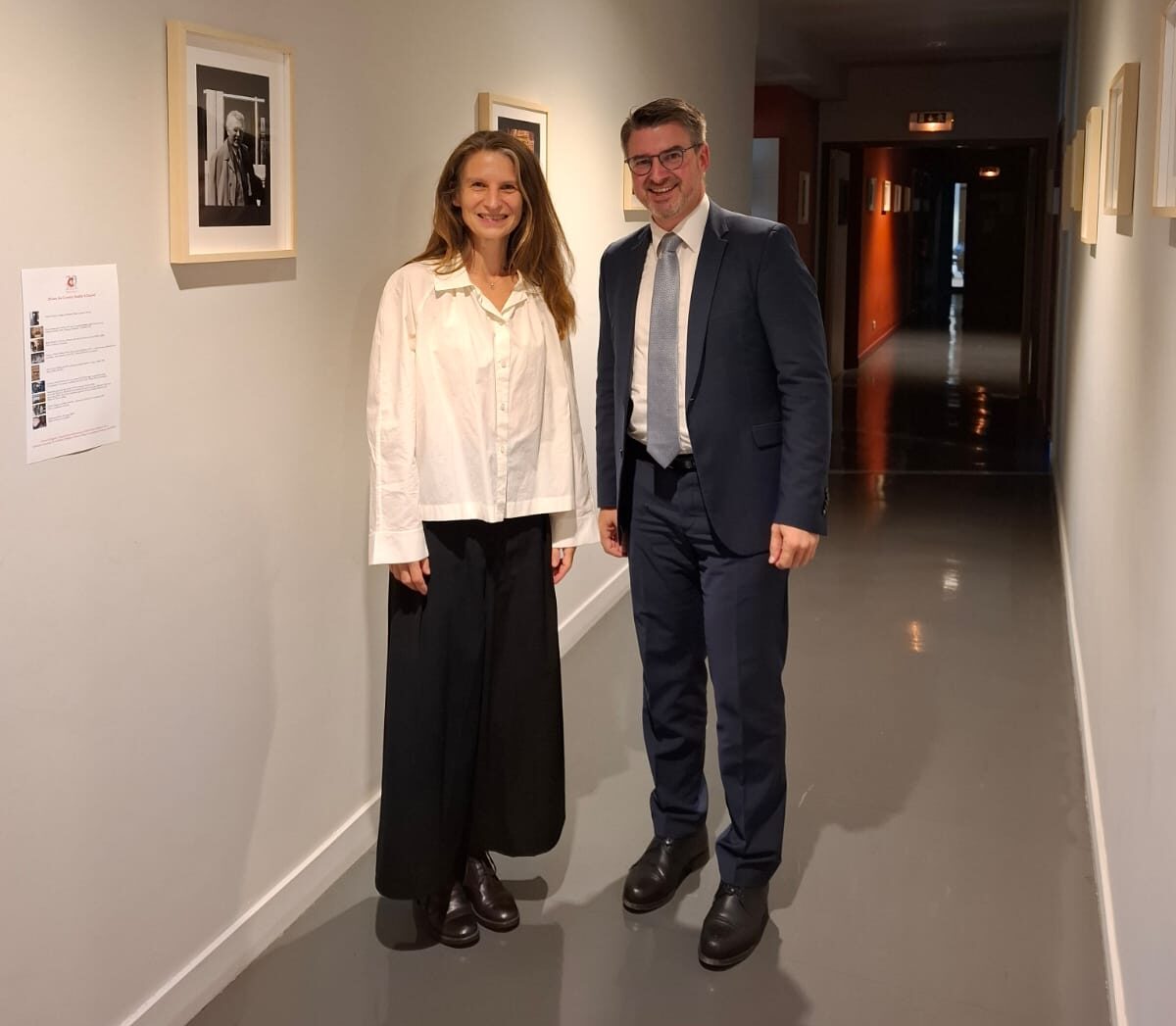
The conference “De la norme à l’œuvre. Élection et fonctions des canons d’auteurs et d’artistes antiques de l’Antiquité à nos jours” took place in Paris from 14 to 16 October 2026. There, Florian Schaffenrath gave a paper entitled “Les commentaires humanistes comme sources de la Kanonforschung historique”. The organisers, Émilie Séris (on the picture here with Florian…
-
On 9–10 October 2026, the first meeting with the Advisory Board took place. Following an informal opening over dinner with the Board members, Florian Schaffenrath was able to give the guests, who had travelled to Innsbruck from all over the world or joined online, an overview of the developments since the SRA was established in…
-
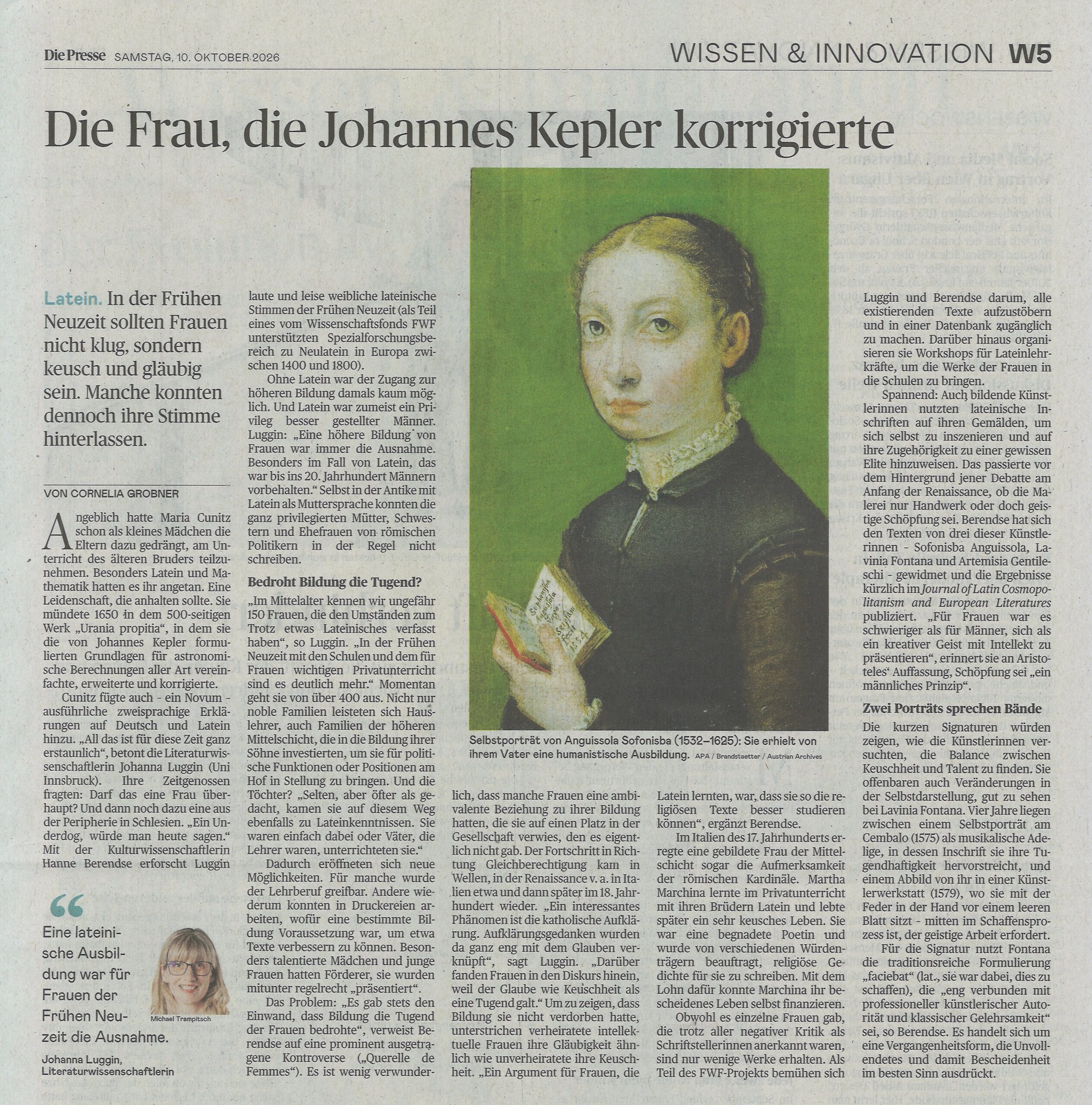
The Austria newspaper “Die Presse” interviewed the researchers of our SRA’s sub-project 4 “Latin of Queens, Abbesses, Scientists: Women’s Voices in Neo-Latin” Johanna Luggin and Hanne Berendse:
-
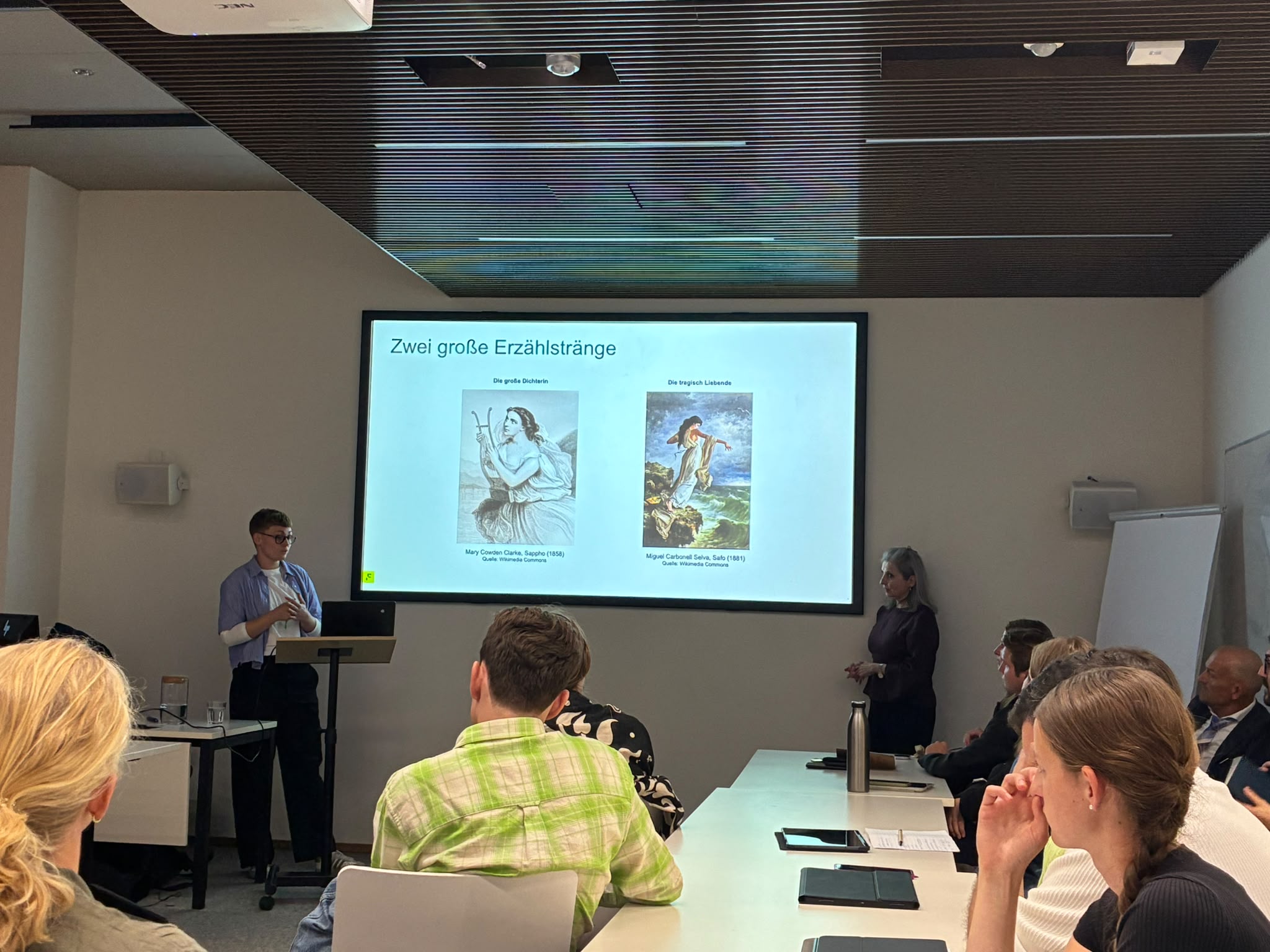
On October 7, 2026, Laura Untner (Freie Universität Berlin) spoke to a large audience about the fascinating early Greek poet Sappho. The lecture provided an overview of how her work has been received in German-speaking countries and introduced the research platform Sappho Digital.
-
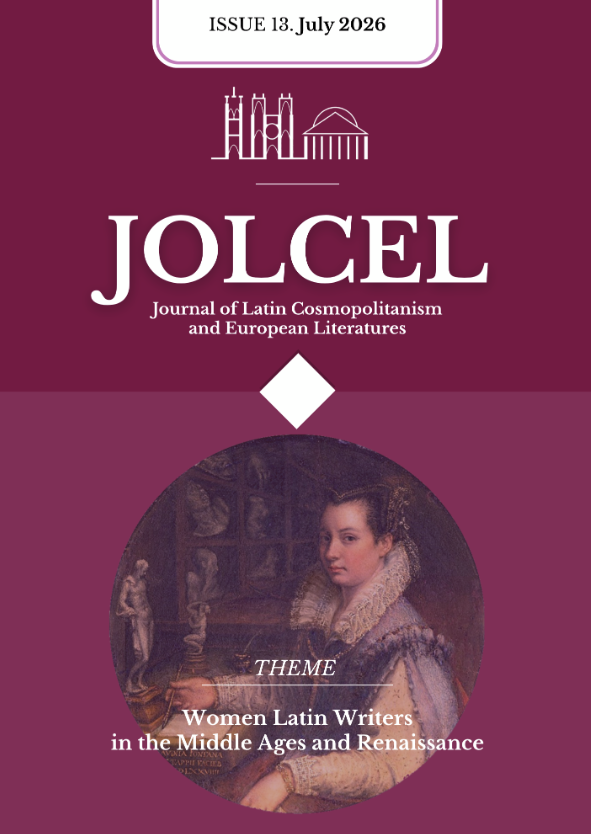
In a new peer-reviewed article, ‘Virgo faciebat’: Artistic Self-Fashioning in Latin Inscriptions by Women Artists in Early Modern Italy, Hanne Berendse examines the Latin signatures of Sofonisba Anguissola, Lavinia Fontana, and Artemisia Gentileschi, three leading women painters of early modern Italy, and argues that they should be read as acts of literary self-fashioning. Combining philological…
-
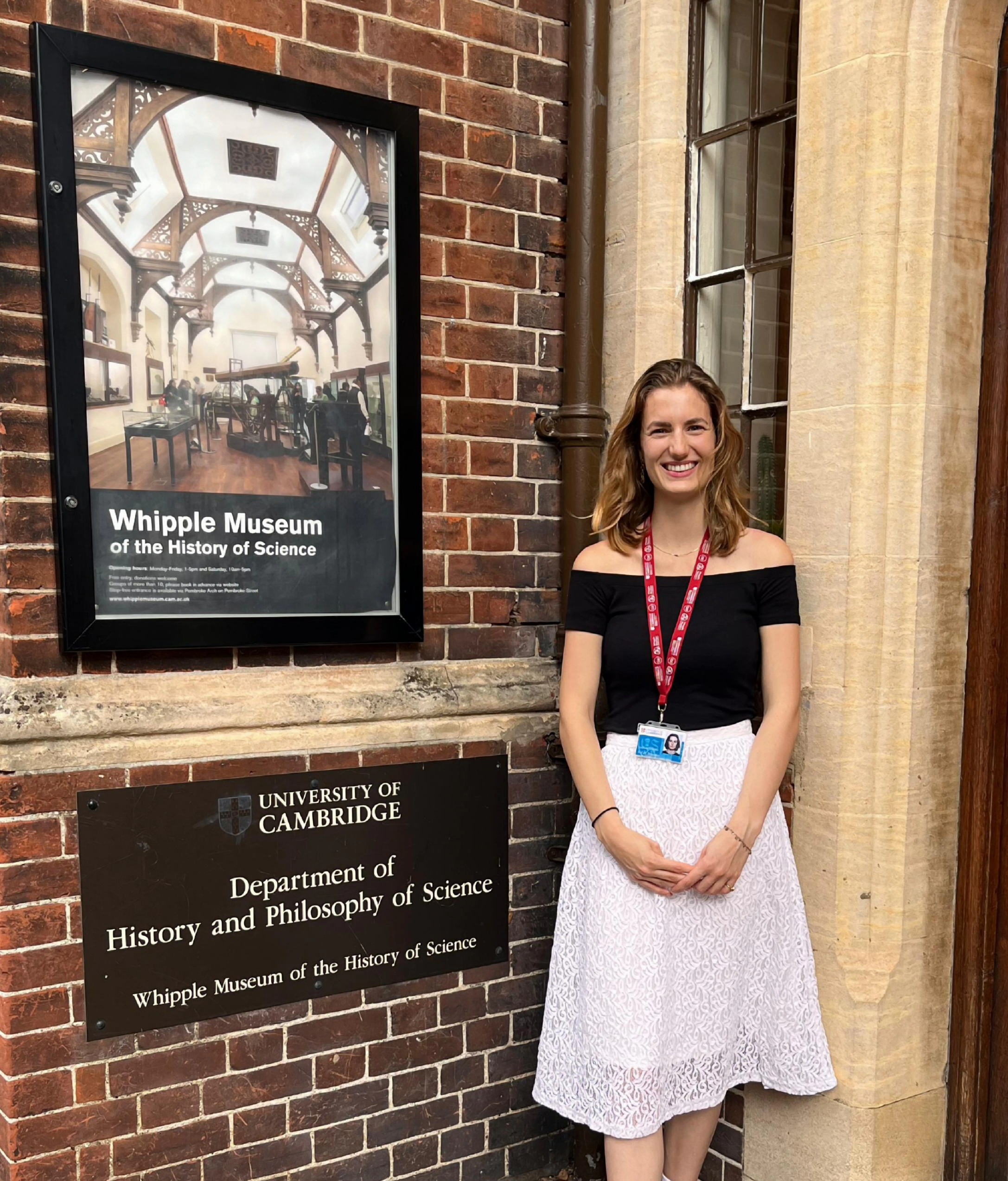
At the end of September, our PhD student Hanne Berendse returned to Innsbruck after a six-month visiting studentship at the University of Cambridge. At Cambridge, she worked on the final stages of her dissertation with Professor Dániel Margóscy, a social and cultural historian of early modern science. During her time at Cambridge, she also presented work…
-
Patryk M. Ryczkowski, PI in the Sub-Project 6 Neolatin and the Newcomers and currently also a MSCA Postdoctoral Fellow at the Vilnius University, participated in the conference Book Culture in the 17th–18th Centuries in the Polish–Lithuanian Commonwealth held at the Ossolineum library in Wrocław (28–29 September 2026). He delivered a paper devoted to Ignacy Kulczyński’s…